See how French roulette's zero rules affect even-money bets, and what to check when comparing online tables, limits and bonus terms.
 Available in GB
Table of Contents
- French Roulette: The Zero Rule That Changes the Odds
- Finding French Roulette at a UK Online Casino
- How to Judge a French Roulette Casino Without Buying the Hype
- Low-Stakes and High-Limit French Roulette
- Live Dealers, Auto-Roulette and Faster Spins
- Roulette Bets, Payouts and the Martingale Trap
- Before You Play: UK Casino Checks That Matter
- What ‘Premium’ Roulette Should Mean
- Playing French Roulette Online: A Safer Starting Point
- French Roulette Bonuses: Read the Wagering Terms First
French Roulette: The Zero Rule That Changes the Odds
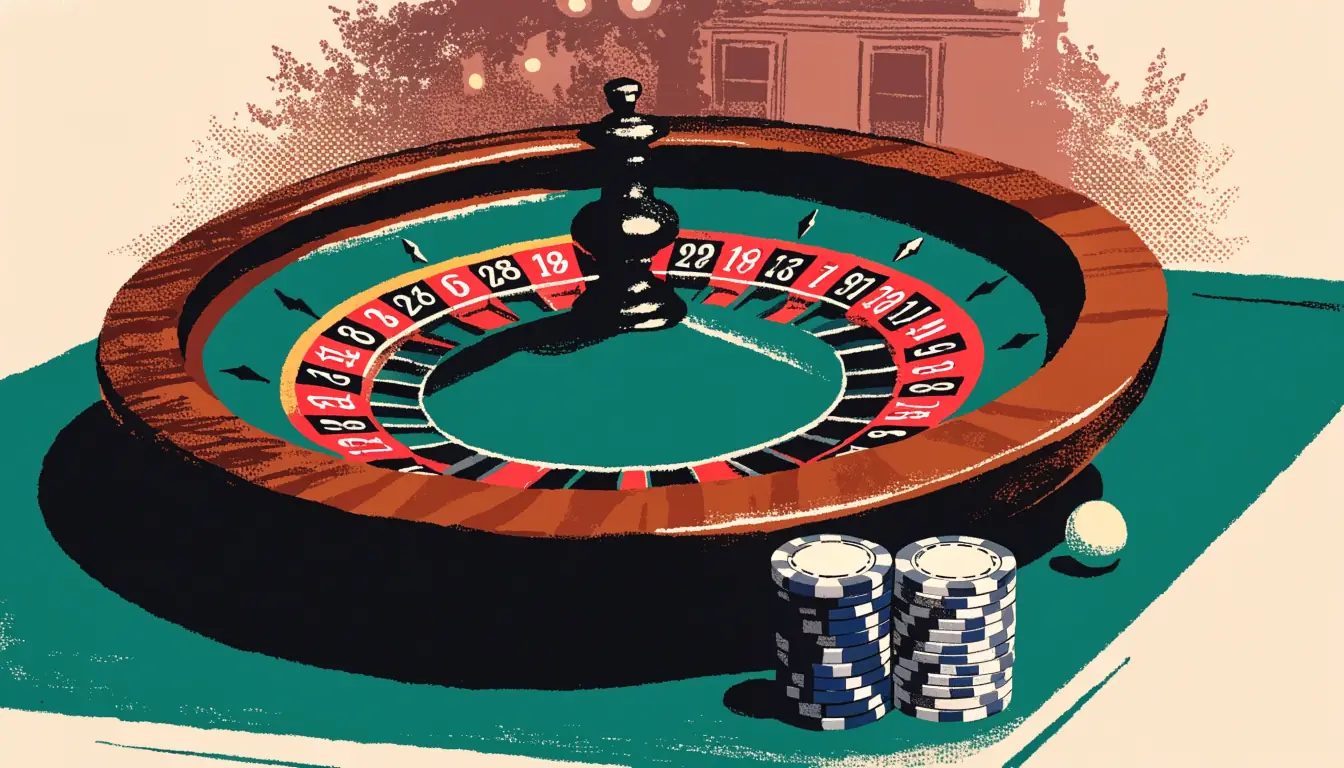
French roulette looks familiar at first: a numbered wheel, a ball, and a green zero sitting outside the red and black numbers. The important difference is not the layout. It is what happens when that zero appears.
That single pocket is where the mathematics changes. On a standard even-money bet, such as red or black, the result is normally either a win or a loss. French roulette can soften the loss through La Partage or hold the wager under En Prison. Those rules are why French roulette has the lowest house edge among the standard roulette variants.
The catch is simple: the benefit applies to even-money bets, not automatically to every wager on the table.
Why the zero matters
European roulette has 37 pockets: numbers 1 to 36 and one zero. American roulette adds a second green zero, making 38 pockets in total. That extra losing pocket is the main reason American roulette is harsher for the player.

On European roulette, the standard house edge is 2.70%. On American roulette, it rises to 5.26%. The bet may look the same on the screen, but the additional zero changes the chance of hitting the house rather than either side of the wager.
French roulette uses the same single-zero wheel structure as European roulette, but its traditional rules give certain bets extra protection. So comparing only the number of pockets misses the point. The wheel matters, but the settlement rule matters too.
La Partage: half the bet comes back
La Partage applies to even-money bets. These include red or black, odd or even, and the low or high number groups. If the ball lands on zero, the casino does not keep the entire stake. Half of the bet is returned.
Imagine placing a bet on red. A red result wins at even money. A black result loses. If zero appears, La Partage returns half your original stake instead of treating the spin as a complete loss.
That changes the long-term cost of the bet. With La Partage, the house edge on eligible even-money bets falls to 1.35%, compared with the 2.70% edge attached to the same broad type of bet on ordinary European roulette.
I used to read “half back” as a small courtesy. It is not. Repeated across many spins, it cuts the effect of the zero in half for the bets covered by the rule.
En Prison: the stake stays in play
En Prison takes a different approach when zero appears on an even-money bet. Instead of returning half immediately, the wager is placed “in prison” for the next spin.

The exact interface can vary between tables, so read the displayed rules before betting. The basic idea is that your stake remains tied to the outcome of the following spin rather than being settled as a full loss at once. A favourable result can release the wager, while another result can leave you with the relevant loss under the table’s stated terms.
This rule gives the zero a second chance to resolve the bet. It does not make red, black, odd, even, high or low bets predictable, and it does not remove the casino’s advantage. It reduces that advantage on the qualifying bets by changing how a zero is handled.
That distinction matters when you are playing French roulette online. A table may use La Partage, En Prison, or describe the settlement in its own rules panel. I would not rely on the game’s title alone. Open the information screen and check what happens to an even-money wager after zero.
French, European and American roulette compared
The core differences are easier to see side by side:
| Variant | Wheel pockets | Standard house edge |
|---|---|---|
| French roulette | Single-zero wheel, with La Partage and En Prison available for qualifying even-money bets | Lowest among standard variants |
| European roulette | 37: numbers 1 to 36 plus one zero | 2.70% |
| American roulette | 38: numbers 1 to 36, zero and double zero | 5.26% |
The French row needs a little care. French roulette is not simply “European roulette with a different name”. Its advantage comes from the zero rules attached to eligible even-money bets. If you switch to another type of wager, La Partage and En Prison may not improve its outcome in the same way.
American roulette is the easiest version to spot mathematically because of the double zero. Both green pockets work against the player. Even when the payout printed beside a bet resembles the payout on a European or French table, the extra losing pocket increases the house edge.
What to check on an online table
When I open an online French roulette game, I check three things before placing a chip:
- whether the wheel has a single zero;
- whether La Partage or En Prison is active;
- which bets qualify for the special zero treatment.
That is enough to separate a genuine French roulette table from a game using the name as decoration. The title can say “French” while the useful detail sits in a small rules window.
The low house edge is a mathematical advantage, not a promise of profit on any session. A run of spins can still go badly, and the zero can still appear at exactly the wrong moment. French roulette simply gives the player more favourable treatment when the relevant even-money rules apply.
Better terms, not magic.
Finding French Roulette at a UK Online Casino
Finding French roulette is less about trusting a banner and more about checking what is actually available after you log in. I have clicked plenty of glossy “live casino” pages that turned out to offer only European roulette, American roulette, or a game with French styling but different rules. The name on the tile is not enough.

Start with the game catalogue
Use the casino’s internal search first. Try French roulette, then look through the live roulette category manually if the search returns nothing. Some catalogues file the game under a provider’s name, a table number, or a broader roulette heading rather than making “French” prominent.
Open the game itself before depositing. The information panel, help screen or rules tab should make the important details visible:
- whether the wheel has a single zero;
- whether La Partage is applied to even-money bets;
- whether En Prison is available;
- whether the game is live or simulated;
- the minimum and maximum stakes shown for that table;
- the published RTP or house-edge information.
A game can look French without giving you the French rules you expected. That distinction matters more than the colour of the layout or the dealer’s accent. If the rules page is vague, I treat the game as unconfirmed rather than filling in the gaps myself.
The catalogue check answers one narrow question: does this casino currently carry a game that matches French roulette? It does not answer whether the operator is suitable overall. Those are separate checks, and mixing them is how attractive labels do the selling.
Confirm that the table is available to you
Live casino lobbies can change depending on your location, account status, device or opening hours. A table visible on a public page may show as unavailable once you enter the British lobby. The game may also be listed by its provider rather than under a plain French roulette heading.
Check the table from the same type of account and device you expect to use. Read the on-screen rules, not just the thumbnail. If the game opens in demo mode, inspect the paytable and game information there, then confirm that the real-money version uses the same rules before making a deposit.
I also look for a clear RTP display or an accessible game-information link. UKGC-licensed operators should make this information available for their roulette products. If you have to hunt through several unrelated pages to find it, that is useful information about the operator’s presentation, even before you compare anything else.

Do not assume that a table called “premium French roulette” has better odds. “Premium” often describes the studio, interface, dealer or limits. It is not a substitute for checking La Partage, En Prison, the RTP and the table conditions.
Then check the operator separately
Once you have found a matching table, move away from the game page and inspect the casino itself. Every operator offering real-money gambling to customers in Great Britain must hold the relevant UK Gambling Commission licence. The UK Gambling Commission is the sole regulator for online casino activity in Great Britain.
Find the operator’s legal name and licence details in the footer, account area or terms. Then verify the licence number on the UK Gambling Commission’s public register before depositing. A logo on a homepage is not the same thing as checking the register. If the operator has no valid UKGC licence, it cannot legally offer real-money live roulette to British residents.
This is where “French roulette casinos” and “online casinos with French roulette” become two different searches in practical terms. The first describes the game you want. The second should lead you to an operator whose identity, licence and rules you can verify. A large catalogue does not compensate for missing regulatory information.
Check the live-casino protections
For live French roulette, I would also inspect the account controls before playing. UKGC-licensed live casino operators must provide deposit limits, loss limits, session-time reminders, reality checks, cool-off periods and GamStop self-exclusion. These should be accessible from the account area rather than hidden in a support article.
New customers must be prompted to set a financial limit before making their first deposit. Account-level limit controls should remain easy to find afterwards. I prefer checking these tools while the account is still empty; it removes the pressure to make decisions with money already sitting there.
Age verification comes first as well. Operators must verify a customer’s age before allowing deposits into a gambling account. The casino should explain what information it needs and when the checks take place. If the process is unclear, I would not treat that as a minor inconvenience.

The payment rules are worth checking too. UKGC-licensed casinos cannot accept credit cards for gambling, and operators cannot accept wallet payments where credit-card funds can be used for gambling. A payment page that explains the available methods and restrictions plainly is easier to trust than one that pushes a deposit button and leaves the conditions buried elsewhere.
Separate availability from comparison
At this stage, you should know whether the casino offers the right game and whether the operator meets the basic British requirements. Comparing operators comes later. That comparison should consider the clarity of the rules, accessible RTP information, account controls, complaints process and the actual French roulette table you can open—not a badge saying “best” or “premium”.
UKGC licensees must provide an internal complaints process and access to an approved Alternative Dispute Resolution service. Find those details before you need them. I have learned that boring pages are often the useful ones.
If a casino passes the catalogue check but fails the licence or protection check, stop there. If it passes both, you have only established that the table and operator are worth further inspection. No hype required.
How to Judge a French Roulette Casino Without Buying the Hype
“Best” is a slippery word in casino advertising. I have clicked it often enough to know what usually follows: a polished page, a few glowing claims and very little detail about the actual roulette game. For French roulette, I would ignore the label and compare the things that can affect your play.
Start with the exact game, not the casino’s slogan
A casino may describe a table as French roulette while leaving the important rules hidden behind a help button. Open the game information before depositing or placing a bet. Check that the table uses a single-zero wheel and clearly explains La Partage and En Prison for even-money bets.
Those rules are not decorative French wording. They are the reason this variant can offer a lower house edge than standard European roulette on the relevant bets. If the game description only says “French style” or “European rules”, that is not enough for me. I want the rules displayed for the actual version I am about to play.

The same check applies to branded or modified games. A familiar roulette name does not automatically mean traditional French rules. Read the paytable, the table layout and the rules page together. If they disagree, pause rather than guessing.
Find the published RTP
The return-to-player figure, or RTP, should be accessible before you commit funds. It is a long-run statistical measure, not a promise about what your next session will return. Still, it gives you a useful way to compare the game being offered with the rules described on screen.
I look for the RTP in the game’s information panel, help section or the operator’s terms. A casino that makes the figure difficult to find has made comparison harder than it needs to be. That does not prove the roulette is poor, but it is a reason to demand more clarity before playing.
Do not treat one attractive figure as proof that an operator is the best online French roulette casino. Confirm that it belongs to the exact table, not to a general roulette page, a different provider or another variant. The game title should match, and the rules should make sense alongside the stated RTP.
Separate the operator from the game provider
The casino supplies the account and the customer interface; a game provider may supply the roulette software or live table. Those are different parts of the experience. A well-known provider does not remove the need to inspect the operator’s terms, limits, withdrawal conditions or complaints procedure.
I also check whether the operator explains who provides the game and whether the roulette is RNG or live. That distinction affects how the table works and what information is available on screen. It is not a reason to call one format universally superior. It is simply part of identifying what you are buying into.
A casino can present an impressive lobby while giving weak information about the individual game. Compare the table page, not just the front page.
Check the licence properly
For British players, the relevant question is whether the operator holds a current UK Gambling Commission licence. Remote operators serving Great Britain must hold the appropriate licence, and a platform without a valid UKGC licence cannot legally offer real-money live roulette to British residents.

Do not rely on a badge copied into a footer. Search the UK Gambling Commission public register and match the operator’s legal name and licence details. I learned to do this separately from reading reviews because a review can repeat an operator’s own claim without checking it.
The licence is not a guarantee that every game suits you. It is a basic legal and accountability check. UKGC-licensed operators must also make RTP information accessible and provide safer-gambling controls, including financial limits, loss limits, session time reminders, reality checks, cool-off periods and GamStop self-exclusion for live casino play.
Read the awkward pages
The most useful information is often not on the roulette table. Open the terms, complaints policy and safer-gambling pages. Look for clear wording about game rules, account restrictions and how a dispute is handled.
A UKGC licensee must offer an internal complaints process and access to an approved Alternative Dispute Resolution service. That gives you a route if something goes wrong, rather than leaving you with a contact form and a marketing promise.
I also check whether the casino prompts new customers to set a financial limit before the first deposit and whether account-level controls are easy to reach afterwards. If the controls are buried, I count that against the operator.
Compare clarity, not adjectives
My shortlist would be built from transparent tables, identifiable licensing information, accessible RTP details and usable account controls. I would not award extra points for “premium”, “exclusive” or “best” unless the underlying information supports the claim.
That approach sounds less exciting than chasing a ranking. It is also more useful. A casino that explains its roulette clearly gives you enough information to make your own decision. No glitter required.
Low-Stakes and High-Limit French Roulette
The phrase “low-limit French roulette” sounds more complicated than it is. It simply means the table accepts smaller bets. That matters if you want to test the game without putting much of your bankroll on each spin. A high-limit table does the opposite: it is built for larger wagers, with a betting floor that may make it unsuitable for casual play.

I learnt this the slightly expensive way. I found a table that looked identical to a cheaper one, then noticed the minimum only after opening it. Same green baize, different decision. Check the stake panel first.
Low stakes: more room to learn
RNG roulette is generally the easiest place to find small minimums. The wheel and ball are simulated by a random number generator, so there is no physical table or dealer stream to accommodate. That allows faster play and can bring the minimum down to 10p.
For a cautious session, that difference is practical rather than glamorous. A 10p minimum lets you examine the layout, try a few bet types and see whether the interface feels clear without committing a large amount on every round. You still face chance, of course. A smaller stake does not make an outcome more likely; it only reduces the amount attached to each decision.
Low-stakes French roulette can also appear in live formats. UK live roulette table minimums can start at 10p. Auto-roulette and speed formats sometimes begin at 5p, according to a specialist review. Treat that as a table-specific detail, not a promise that every low-cost room will offer French rules.
That last point catches people out. A low minimum tells you about the size of the wager, not the roulette variant. Before joining, confirm that the game is actually French roulette and that the displayed rules are the ones you expect. Cheap to enter is not the same as the right table.
Standard tables: the middle ground
A standard-limit table sits between the two extremes. It may suit someone who already knows the interface and wants a live or automated experience without moving into a room designed around large bets.
The useful comparison is not the label itself but the minimum shown on the table. “Standard” is not a universal stake category. One operator may use it for a conventional live table, while another may apply the term to a room with a different betting range. Read the limits attached to the individual game.
RNG play remains attractive when your priority is keeping the stake small and the pace under your control. Live play offers a physical wheel and dealer, but the minimum may be higher depending on the table. Auto-roulette can sit between those experiences: the wheel is physical, while the round does not depend on a dealer presenting every action.
I try to separate those choices in my head. First decide what you can comfortably stake. Then choose whether you want a generated spin, an automated physical wheel or a live table. Starting with the format and only afterwards checking the limit is how I ended up in rooms I did not intend to play.
Higher limits and VIP rooms
High-limit French roulette is aimed at players willing to place substantially larger wagers. A VIP label may signal a different betting range, but it does not automatically mean better rules or a better mathematical deal. The stake level is the point.
Higher limits can change the feel of a session. A losing run has more impact when each round represents a larger slice of your available bankroll. That is not a special feature of VIP roulette; it is simply the consequence of increasing the amount at risk. I have found that a table can feel calm until the bet size makes every result feel urgent.
For that reason, compare the minimum before considering the maximum. If the opening stake is already uncomfortable, the table is not suitable, regardless of its presentation. A high-limit room may be appropriate for someone deliberately seeking that range, while a low-stakes table gives another player more breathing space.
The sensible starting point is plain: select the smallest limit that fits your planned session, then check whether the French roulette rules are clearly displayed. RNG tables may offer the lowest entry point, while live, auto-roulette and speed tables can have their own minimums. The number on the screen matters more than the room’s marketing label.
Small stake, clear limit.

Live Dealers, Auto-Roulette and Faster Spins
A live French roulette table is built around a real wheel rather than a software animation. The casino streams the wheel from a studio, shows a human dealer and captures each physical ball drop on camera. You can watch the croupier manage the table, announce the result and prepare the next round. That is the main appeal of live casino French roulette: the format feels closer to sitting at a physical table, even though you are playing through a screen.
I have found that the live format changes what you pay attention to. The dealer, wheel and other players create a sense of occasion, but they also add pauses. Bets close, the ball is released, the result is confirmed and the wheel is reset. None of that is a defect; it is simply the rhythm of a real table.
A live French roulette casino should therefore be judged as a viewing experience as much as a game interface. Look for a clear camera view of the wheel and ball, readable betting controls and an uninterrupted display of the result. If the stream lags or the wheel is difficult to see, the human element does not add much. A glossy studio is not the same thing as a useful table.
Auto-roulette and RNG play
Auto-roulette removes the dealer from the physical process. An automated wheel handles the spin and ball drop, while the screen presents the betting phase and result. This can suit you if you want the appearance of a physical wheel without waiting for a croupier to operate each round. It is still important to check which game you have opened, because an automated table may not use the French rules you expected.
RNG roulette goes further: a random number generator simulates the spin rather than showing a physical wheel. It normally runs faster and can offer lower minimum stakes, with some games starting at 10p. The result is a cleaner, more private session. There is no dealer to watch and no studio stream to follow, so the game moves according to the software’s cycle.
That speed can be useful, but I have also made the mistake of treating it as harmless. When rounds arrive quickly, it is easier to place another wager before thinking about the last one. The screen feels quiet; the balance can move quickly.
What speed roulette changes
Speed roulette is designed to shorten the gaps between rounds. A specialist review reports that one such format can exceed 150 spins per hour, while a standard table is described as running at 80–100 spins per hour. Treat that as a description of a particular format, not a permanent promise for every table carrying the label.
The difference matters because the pace changes your session even when the wheel rules stay the same. At a standard live table, 80–100 spins per hour leaves more time between decisions. With speed roulette, the next betting window can arrive before you have properly reviewed what you just did. Auto-roulette sits between the two experiences for many players: a physical mechanism remains visible, but the process is more streamlined.
RNG American roulette is described as running at 150–200 or more spins per hour, compared with 50–60 spins per hour for live dealer play. Those figures show why format choice matters. Faster play does not improve the odds; it simply creates more opportunities to stake money in the same period.
I prefer live play when I want a measured pace and an actual dealer. When I want fewer distractions, automated or RNG roulette is more direct. The sensible choice is the one whose rhythm you can control. Pace is part of the cost.
Roulette Bets, Payouts and the Martingale Trap
Roulette bets fall into two broad groups: inside bets, placed on particular numbers or small combinations, and outside bets, which cover wider groups. The payout reflects how many numbers the selection covers, but the wheel still decides the result.
A straight-up bet on one number pays 35:1. A split bet covering two neighbouring numbers pays 17:1, while a street bet on a horizontal row of three numbers pays 11:1. These bets can produce a larger return when they win, but they also miss more often because fewer pockets are covered.
Outside bets spread the stake more widely:
- Red or black: 1:1
- Even or odd: 1:1
- High or low: 1:1
That does not make them safe bets. A losing result still removes the stake, and a zero is not a winning red, black, even, odd, high or low result. The exact treatment depends on the roulette rules, so I check the table information before placing anything. Small detail, real money.
Why the Martingale looks convincing
The Martingale system is simple: after every loss, double the next stake. The idea is that one eventual win should recover the earlier losses and leave a profit equal to the original stake.
I understand why it attracts people. A run of losses feels temporary, and increasing the next bet creates the impression that recovery is becoming more likely. It is not. Each spin remains a separate event, and roulette odds are determined by chance. No betting system can predict the final result.
The problem is the size of the required stakes. A losing streak can damage a bankroll quickly because each recovery attempt is larger than the last. You can reach the table maximum, run out of money, or simply decide that the next bet is too large before a win appears. The system has not changed the wheel; it has only increased the amount exposed to it.
A more sensible way to use bet types
I treat the payout as a description of the winning return, not as a measure of value or probability. Before joining a French roulette casino game, I decide what I can afford to lose, choose a stake that does not need chasing, and keep it consistent. If the session turns against me, I stop rather than trying to repair it with a bigger wager.
That approach is less dramatic than the Martingale. It is also less likely to turn one unlucky sequence into a bankroll problem.
Before You Play: UK Casino Checks That Matter
Before joining an online casino with French roulette, I check the boring safeguards first. They matter more than a polished table interface.
The UK Gambling Commission (UKGC) is the sole regulator for online casino activity in Great Britain. A legal operator serving British customers must hold a current UKGC operating licence. I would verify the licence number on the Commission’s public register before depositing, rather than trusting a badge in the site footer. A platform without a valid UKGC licence cannot legally offer real-money live roulette to British residents.
Account and money checks
Age verification must happen before an operator allows you to deposit. Do not treat this as unnecessary friction: it is one of the basic protections built into the account-opening process.
A UKGC-licensed casino must prompt new customers to set a financial limit before the first deposit and provide account-level controls for changing limits. For live casino play, the required safer-gambling tools include deposit and loss limits, session-time reminders, reality checks, cool-off periods and GamStop self-exclusion. I have found it easier to set a boundary before playing than to invent one after a losing session.
Credit cards cannot be used for gambling at UKGC-licensed casinos. That also covers credit-card funding routed through a money service business, and wallets that allow credit-card funds to be used for gambling.
If something goes wrong
Keep screenshots, payment records and the relevant terms if you need to challenge an account decision or transaction. The operator must provide an internal complaints process and access to an approved Alternative Dispute Resolution service. Follow that route before treating a dispute as finished. It gives you a documented path instead of another angry email.
What ‘Premium’ Roulette Should Mean
“Premium” sounds like a feature. On a roulette page, it is usually just a label until you check what sits behind it. I have clicked through enough polished tables to know that better graphics, a named studio or a smart-looking interface does not automatically improve the mathematical terms.
For French roulette, start with the rules. Confirm that the table actually applies La Partage and En Prison where stated, rather than assuming that any table carrying the French name uses the version you expect. Those rules are why French roulette has the lowest house edge among standard roulette variants. The label itself does none of that work.
Then check the table information. A premium table may suit you because of its presentation or betting range, but those are practical features, not proof of better odds. Look for the minimum and maximum stakes before joining, so the table fits the amount you intended to risk. A grand title should not push you into a larger bet.
RTP information should also be easy to find. If the operator publishes it in the game details, help section or rules panel, you can compare the stated return with the version you are considering. If the figure is hidden behind several menus, or the rules page is vague, I treat “premium” as marketing rather than useful information.
My check is simple: French rules first, table limits second, accessible RTP details third. If those basics are clear, the label may describe a nicer format. It does not create a special advantage. Fancy wrapper, same chance.
Playing French Roulette Online: A Safer Starting Point
Starting with French roulette online is less about finding a clever system and more about removing avoidable surprises. I begin by opening the game information before placing a chip. The table should clearly identify itself as French roulette and show whether La Partage and En Prison apply. If those rules are not visible, I do not assume the title tells the whole story.
I also check the published RTP and the betting interface before depositing. That sounds fussy, but it takes less time than discovering after a win that the game I opened was a different roulette variant. A UKGC-licensed operator should make relevant game information accessible, so unclear rules are a reason to pause rather than click through.
Next, I set a financial limit before the first deposit. Remote operators must prompt new customers to choose one, and the account should provide controls for changing limits. I treat that limit as a boundary for entertainment spending, not as a target to recover after a bad session. My own poor habit was treating an early loss as unfinished business. That is how a small session grows teeth.
Choose a pace you can follow. A standard table gives you time to review each decision; a quicker format encourages automatic betting. Neither changes the underlying chance. No roulette strategy can predict where the ball will land, because each result is determined by chance.
I would also decide when the session ends before playing: after the time available has passed, or when the planned spend is gone. Do not borrow for a spin, chase losses, or raise stakes because the table has been cold. Keep it ordinary. Keep it bounded.
French Roulette Bonuses: Read the Wagering Terms First
A casino French roulette bonus can look attractive until you check how roulette bets are treated in the promotion’s terms. The important detail is game weighting: the casino may count only part of your roulette stake towards the wagering requirement. That percentage is not fixed across operators or even across bonuses.
Most UK operators apply a weighting of 10% to 20% to roulette wagers. In practical terms, a stake of £1 may add only 10p or 20p to the amount you need to wager, depending on the published rule. Those figures describe the contribution, not a guaranteed return and not the size of the bonus itself.
The format can matter too. An operator may treat RNG roulette differently from live roulette. The available terms can assign live roulette a 10% or 20% weighting, while RNG roulette may receive full, 100% weighting. A specialist review may describe those differences, but I would still treat the operator’s own bonus page as the controlling document: promotions change, and a review can lag behind.
That distinction caught me out before. I saw roulette listed among the eligible games and assumed every spin would clear the requirement at the same rate. It did not. The wording beside the game category mattered more than the headline offer.
Since January 2026, licensed operators in the UK have been subject to a ten-times ceiling on bonus wagering. That cap does not make every offer equally useful. Check whether French roulette is included, whether live and RNG versions are weighted separately, and whether any other conditions apply before accepting bonus funds.
Read the small print first. Always.
Is live dealer roulette fair?
Live dealer roulette uses a real wheel, a physical ball and human dealers. Roulette outcomes are determined by chance, so no strategy can predict the result.
Should I play American or European roulette if I’m in the UK?
European roulette has the lower house edge: 2.70%, compared with 5.26% for American roulette. French roulette can be lower still on eligible even-money bets when La Partage or En Prison applies.
How does the 10x wagering cap affect roulette bonuses?
Since January 2026, bonus wagering requirements at UK-licensed operators cannot exceed 10 times the bonus. Roulette may contribute only 10% to 20% toward those requirements, while RNG roulette may count at 100%, depending on the operator and game.
Can I use a casino bonus to play American roulette?
You may be able to, but roulette’s contribution to bonus wagering varies by operator and game type. Check the bonus terms for the contribution rate before you play.
Prepared by the Casino not on Gamstop editorial staff.