
How the UK Gambling Commission Regulates Online Casinos
By Eleanor Hartwell, Gambling Regulation Analyst · · 9 min read
Every legal online casino that takes money from a customer in Great Britain answers to one body: the Gambling Commission. Understanding how that regulator works is the starting point for understanding the entire “not on GamStop” niche, because a casino not on GamStop is, almost by definition, a casino operating outside the Commission’s reach. This page sets out the regulatory machinery in plain terms, drawn from the primary legislation and the regulator’s own published rules.
 Available in GB
Table of Contents
- The Gambling Commission is a statutory regulator, not an industry body
- Why a casino based abroad still needs a UK licence
- What an operating licence actually requires
- The 2025-2026 reform wave that is pushing demand offshore
- Reading the regulator before reading the marketing
- Support and responsible gambling
- About the author
The Gambling Commission is a statutory regulator, not an industry body
The Gambling Commission is an independent non-departmental public body created under the Gambling Act 2005. It is not a trade association, a voluntary code, or a private certification scheme; it is a statutory regulator that derives its powers directly from an Act of Parliament. That distinction matters because it is the source of the Commission’s ability to license, fine, suspend and prosecute operators rather than merely recommend good practice.
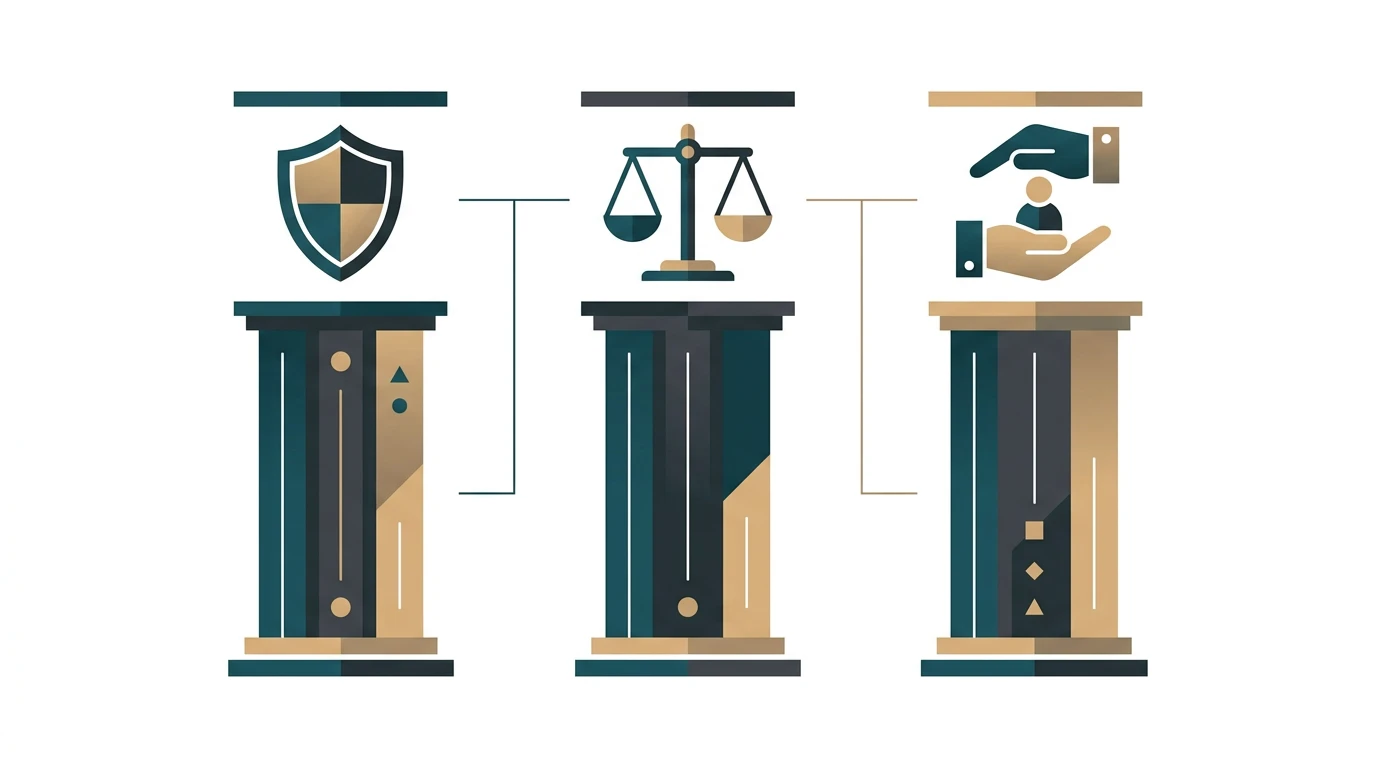
The 2005 Act gives the Commission three licensing objectives that frame every decision it makes. The first is preventing gambling from being a source of crime or disorder, being associated with crime, or being used to support crime. The second is ensuring gambling is conducted in a fair and open way. The third is protecting children and other vulnerable people from being harmed or exploited by gambling. Operators are judged against these objectives continuously, not just at the point of application.
For anyone weighing up the difference between a UK-licensed site and one of the casinos not on GamStop, this is the core trade-off in a single sentence: the licensed site is bound to those three objectives by law, while the offshore site is not. Our casinos not on GamStop overview traces how that gap shapes the whole market.
Why a casino based abroad still needs a UK licence
The most common misunderstanding about UK gambling law is the belief that an operator escapes regulation simply by basing its servers overseas. That was broadly true before 2014, when the regime was based on the “point of supply.” The Gambling (Licensing and Advertising) Act 2014 changed the basis to “point of consumption,” with Royal Assent on 14 May 2014 and coming into force on 1 November 2014.
Under the point-of-consumption rule, any operator offering remote gambling facilities to consumers in Great Britain must hold a Gambling Commission operating licence, regardless of where the company or its equipment sits. There is a technical nuance worth noting: a remote operating licence is triggered where remote gambling equipment is located in Great Britain, but the 2014 reform extended the offence so that an operator transacting with British consumers from anywhere can fall within scope. The practical effect is that the location of the server stopped being a shield.
Providing facilities for gambling without the required licence is a criminal offence under section 33 of the Gambling Act 2005. The full statutory wording, including how the territorial application works, is set out on the legislation.gov.uk text of the Act, and the Commission summarises the same primary legislation in its guidance to licensing authorities. We unpack what section 33 means for individual players, as opposed to operators, on the page covering section 33 and operator offences.

What an operating licence actually requires
Holding a Commission licence is not a one-off badge. Operators must satisfy detailed licence conditions and codes of practice covering identity verification, anti-money-laundering controls, advertising standards, the handling of customer funds, and the offer of safer-gambling tools. They must also connect to the national self-exclusion scheme, which is where GamStop enters the picture as a binding licence condition rather than an optional extra.
Since 2020, participation in GamStop has been mandatory for every Commission-licensed remote operator. That is the single most important fact for understanding the niche: GamStop is wired into the licence itself, so a site that holds a UK licence cannot, lawfully, be “not on GamStop.” A site that is genuinely not on GamStop is therefore one that has chosen to operate outside the UK licensing system entirely. The mechanics of that scheme are covered in detail in our explanation of GamStop as a licence condition.

The Commission backs these conditions with real enforcement powers. It can impose financial penalties, attach additional conditions, suspend a licence, or revoke it outright. It also works with payment providers, software firms and search engines to disrupt operators acting without a licence, which is why offshore brands periodically find their pages delisted or their payment routes blocked.
The 2025-2026 reform wave that is pushing demand offshore
The regulatory perimeter has tightened sharply over the past two years, and several of these changes are directly relevant to why search interest in offshore alternatives has grown. The reforms are not abstract policy; they change the day-to-day experience of playing at a UK-licensed site.

Stake caps and product controls
Statutory limits now cap online slot stakes at GBP 5 per spin for players aged 25 and over, and GBP 2 per spin for players aged 18 to 24. Autoplay was prohibited across all online gaming from 17 January 2025, removing the feature that let spins run automatically without a player pressing each time. These controls are designed to slow play and reduce harm, but they also represent friction that some players seek to avoid.
Bonus rules and the wagering cap
From 19 January 2026 the Commission banned mixed-product bonuses (offers that bundle, for example, casino and betting incentives) and introduced a cap on bonus wagering requirements at UK-licensed sites. This reshapes the kind of promotions a licensed operator can run, and it is part of why offshore bonuses, which sit outside these rules, can appear far more generous on paper. We examine that contrast in our analysis of operator gambling tax and bonus economics.

Tax, levy and enforcement funding
The cost side of running a licensed operation is rising too. Remote Gaming Duty, the tax charged on operator profits from UK customers, is increasing from 21 per cent to 40 per cent for accounting periods beginning on or after 1 April 2026, announced in the Autumn Budget 2025. The change is documented in the Treasury’s published measure and corroborated by independent budget reporting, and it sits alongside a new statutory levy estimated at around GBP 100 million a year to fund research, prevention and treatment. The Commission also received roughly GBP 26 million in additional funding to combat illegal platforms. You can read the Government’s own description of the duty change in the GOV.UK Remote Gaming Duty notice.

Reading the regulator before reading the marketing
Much of the affiliate coverage of casinos not on GamStop describes UK regulation in a single dismissive line, then moves straight to bonus tables. That ordering reverses the logic. The regulatory framework is what determines whether a player has any recourse at all if something goes wrong, and it is the reason the offshore market exists in the first place: the controls described above apply to licensed sites and stop precisely at the regulatory border.
A licensed UK casino operates inside a system of statutory objectives, mandatory self-exclusion, fund-handling rules, advertising limits and active enforcement. An offshore site, whatever its own licence elsewhere, sits outside all of it for a British player. The reforms of 2025 and 2026 widen the experiential gap between the two, which is exactly why this regulatory page is the anchor that the rest of the site refers back to. If you want the broader picture of how these rules interact with the wider market, the offshore market explained page draws the strands together.
Support and responsible gambling
If gambling is causing you harm, free and confidential help is available in the UK. The National Gambling Helpline, run by GamCare, is open 24 hours a day on 0808 8020 133. You can also find tools and information at BeGambleAware and GamCare, and register for self-exclusion across UK-licensed sites through GamStop.
About the author
Eleanor Hartwell is a gambling-regulation analyst with over twelve years spent tracking UK licensing policy, player-protection schemes and the offshore operator market. Her work focuses on how self-exclusion frameworks such as GamStop interact with operators licensed outside the United Kingdom and what that means for consumer risk. More about Eleanor Hartwell.
The full picture is in our guide to casinos not on GamStop.
The self-exclusion scheme it mandates is GamStop.
Prepared by the Casino not on Gamstop editorial staff.