
Payment Methods Offshore Casinos Offer UK Players
 Available in GB
Payments are where the difference between a UKGC-licensed site and a casino not on GamStop becomes concrete. The UK regime constrains what a licensed operator may accept; offshore sites are not bound by those constraints, which is why the payment menus look different. This page sets out the UK baseline first so the contrast is clear, then explains what offshore sites add, how crypto deposits actually work, and why “no checks” payments carry a specific recovery risk if something goes wrong.
Table of Contents
- The UK baseline: debit cards only, and no credit
- How offshore payment menus differ
- How crypto deposits and withdrawals work, and the audit-trail problem
- Bank blocks and why enforcement is weaker against crypto
- How to read an offshore cashier without being misled
- Support and responsible gambling
- About the author
The UK baseline: debit cards only, and no credit
At a UKGC-licensed casino the payment menu is deliberately narrow. Credit cards have been banned for online gambling deposits since April 2020, a rule introduced to stop people gambling with borrowed money. That single restriction is one of the clearest dividing lines between licensed and offshore sites.
Within the licensed environment the common rails are Visa and Mastercard debit, PayPal on an opt-in basis for gambling, Apple Pay for deposits only, the e-wallets Skrill and Neteller, Trustly and direct bank transfer, Paysafecard as a deposit-only voucher, and Pay by Mobile through Boku. The pattern is that withdrawals are tightly tied to verified accounts and most methods are designed to leave a clean, traceable record. This is not an accident; it is the consumer-protection logic of the regime working through the cashier.
If you want the regulatory framing behind these rules, the page on how UK online casinos are regulated explains the licensing conditions that shape what an operator can offer.
How offshore payment menus differ
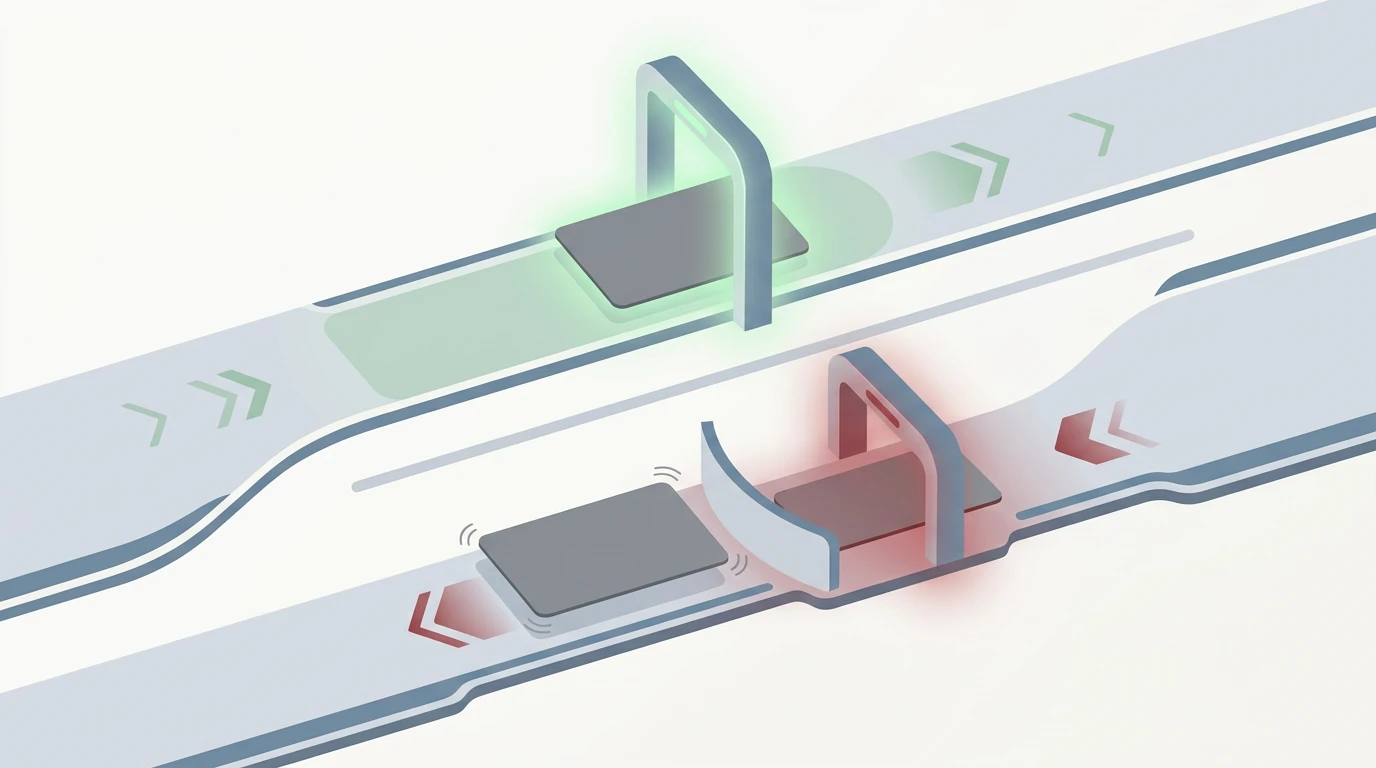
Casinos not on GamStop differ from the UK baseline in two main ways. First, they commonly accept cryptocurrency, and some still accept credit cards that a UKGC site cannot. Second, the checks attached to payments are typically lighter, which is the cashier-level expression of the broader light-touch oversight discussed on the page covering offshore licence jurisdictions.
You will usually still see familiar methods such as debit cards and some e-wallets, because operators want to reach UK players who do not hold crypto. But the headline differentiator the market advertises is crypto acceptance, framed as faster and more private. The speed and privacy are real; so is the loss of protection that comes with them.
It helps to separate two things the offshore cashier blends together. One is convenience: more methods, faster settlement, fewer steps at sign-up. The other is exposure: every method that sidesteps a UK intermediary also sidesteps the protections that intermediary provides. The reason offshore menus can be longer is precisely that they answer to a lighter rulebook, so the breadth of options is a symptom of weaker oversight rather than a sign of a better operator.

How crypto deposits and withdrawals work, and the audit-trail problem
A crypto deposit works by sending coins from your own wallet to a wallet address the casino provides. Withdrawals reverse the flow: the casino sends coins back to an address you supply. There is no bank or card network sitting in the middle, which is exactly why the transaction is fast and why it is hard to reverse.
That irreversibility is the core risk. With a card or a regulated e-wallet there is an intermediary you can complain to and, in some cases, a chargeback or dispute mechanism. With a direct crypto transfer to an offshore operator there is no such backstop. If the operator refuses a withdrawal, disappears, or voids your balance under opaque terms, the on-chain record shows the coins left your wallet but gives you no route to recover them. An anonymous, crypto-funded account leaves no recoverable audit trail you can take to a UK body, because no UK body has jurisdiction.
This is the same mechanism that makes “no verification” sites risky. The detail of how that registration model fails is covered on the page about no-verification and crypto registration, and it is worth reading alongside this one before treating crypto convenience as a pure benefit.
Why “private” and “protected” are not the same thing
Privacy at deposit means fewer identity checks at sign-up. It does not mean your money is safer. In fact the same anonymity that removes friction also removes every consumer-protection hook: no verified counterparty, no UK dispute resolution, no fund-segregation guarantee. The convenience and the exposure are two sides of one design choice.

Bank blocks and why enforcement is weaker against crypto
UK banks increasingly monitor and sometimes block transactions to operators they identify as unlicensed gambling sites, and several banks offer customer-controlled gambling-spend blocks. This works reasonably well for card and bank-transfer payments, because those flow through systems the bank can see and stop.
Crypto is harder to police. Once funds move into a crypto exchange or wallet, the trail to an offshore casino is less visible to a UK bank, which is part of why crypto has become the preferred offshore rail. The UK regulator has confirmed it is examining whether licensed operators could accept cryptocurrency in future, an early-stage review in 2026, but at present crypto sits firmly on the offshore side of the line.
The UKGC has also been given additional enforcement funding to work with payment providers in disrupting transactions to illegal sites, which means the payment route to an unlicensed operator is an active target, not a settled convenience.

How to read an offshore cashier without being misled
The marketing language around offshore payments leans on speed and anonymity. A clearer way to read the cashier is to ask what protection each method removes. A method that bypasses your bank also bypasses your bank’s ability to help you. A method with no identity check at deposit usually pairs with an identity demand at withdrawal, which is where disputes cluster.

Payments also connect directly to bonuses: the methods a site accepts often determine which promotions you qualify for, and large advertised offers frequently sit behind crypto deposits. Before you treat a payment perk as a reason to sign up, read how bonuses and wagering requirements actually convert into withdrawable money, and see the wider casinos not on GamStop overview for how payments, licensing and bonuses fit together.
| Characteristic | UKGC-licensed sites | Casinos not on GamStop |
|---|---|---|
| Credit cards | Banned since April 2020 | Sometimes accepted |
| Cryptocurrency | Not accepted (review ongoing 2026) | Commonly accepted |
| Identity checks at deposit | Standard KYC | Often light or deferred |
| Dispute or chargeback route | Card/e-wallet routes exist | Limited; none for crypto |
| UK recourse if funds lost | UK ADR available | None |
Primary sources for the UK payment rules referenced here:
- UK Gambling Commission (credit-card ban and payment-provider enforcement)
- GOV.UK (gambling policy and consumer guidance)
Support and responsible gambling
If gambling is causing you harm, free and confidential help is available in the UK. The National Gambling Helpline, operated by GamCare, is open 24/7 on 0808 8020 133. You can self-exclude through GamStop, find tools and advice via BeGambleAware, or speak to GamCare directly.
About the author
Eleanor Hartwell is a gambling-regulation analyst with over twelve years spent tracking UK licensing policy, player-protection schemes and the offshore operator market. She writes for an informational audience seeking to understand the legal and practical realities of gambling outside the UK regulatory perimeter. More about Eleanor Hartwell.
The full picture is in our guide to casinos not on GamStop.
The credit-card ban comes from the UKGC rulebook.
Prepared by the Casino not on Gamstop editorial staff.