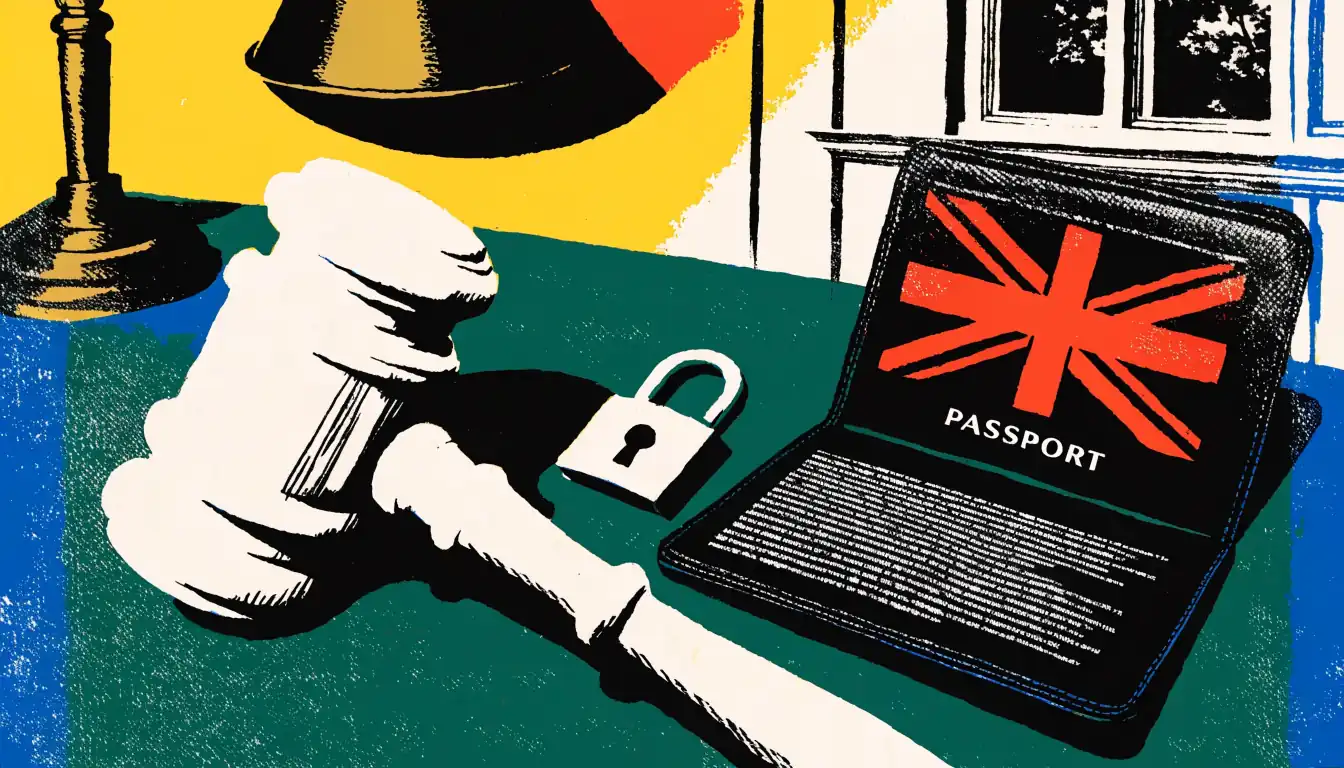
GamStop covers UKGC-licensed operators, while casinos outside that system may have different licences, protections and terms.
 Available in GB
Table of Contents
- What “Not on GamStop” Really Means in 2026
- Why These Casinos Sit Outside GamStop
- What You Give Up Outside the UKGC Framework
- New Sites, Mobile Deposits and the Checks That Matter
- Which Casinos Are Not on GamStop? Read the Licence First
- Payment Claims, Bonus Terms and “Reputable” Labels
- Curacao and European Licences: What They Do—and Don’t—Tell You
- If You’re on GamStop, Don’t Treat an Outside Site as a Workaround
- In Wales, the Same GamStop Boundary Applies
- Slots, Bonus Wagering and Getting Your Money Out
What “Not on GamStop” Really Means in 2026
“Not on GamStop” sounds like a quality label. It is not. It describes whether an online casino is connected to the UK self-exclusion scheme, and nothing more.
GamStop restricts a registered user from gambling with operators licensed by the UK Gambling Commission. UKGC-licensed online casinos are required to participate, so an active self-exclusion registration is meant to apply across those licensed sites rather than only at the operator where the player originally signed up.
That is the first boundary to understand: GamStop belongs to the UK Gambling Commission’s licensing system. It is not a universal database covering every casino website on the internet.
What happens when you register with GamStop
When you join GamStop, your details are used to prevent gambling with participating UKGC-licensed operators during the exclusion period you selected. Those operators must take the registration into account when allowing access to their gambling services.
I think of it as a shared lock across the UK-licensed market. You do not need to contact every licensed casino separately for the exclusion to apply there. The system is built around the operator’s UKGC status, not around a particular brand name or a single account.
That also explains why phrases such as “UK casino not registered with GamStop” can be misleading. A casino legally serving customers in Great Britain must hold the relevant UK Gambling Commission licence. A site may describe itself as available to UK players, but that description does not turn an unlicensed operator into a legal UK casino.
What “not on GamStop” means
A casino not registered with GamStop is generally a site operating outside the UKGC framework. Because it is not a UKGC-licensed participant, it does not take part in the GamStop scheme.
That does not mean GamStop has approved the site, assessed it, or declared it suitable. It only means the site sits outside the scheme’s participating network. The distinction matters, especially when a page presents “casinos not registered with GamStop” as though the phrase itself were a recommendation.
It is not one.
An online casino outside the UKGC framework may not recognise a player’s GamStop registration. In practical terms, the self-exclusion block that applies at participating operators may not be applied there. That is a description of how the boundary works, not an invitation to cross it.
I made the mistake of treating a missing restriction as evidence that a site was more flexible or more trustworthy. It was neither. A door being unlocked tells you only that the lock is absent.
Not the same as safe, approved or legal
The phrase also says nothing, by itself, about fairness, financial reliability, complaints handling or the way a casino treats customer information. It does not confirm that an operator is safe. It does not show that withdrawals will be straightforward. It does not prove that the website has effective age checks or responsible-gambling controls.
Most importantly, playing at a non-GamStop site is not a criminal offence for the player. However, such a site does not provide the consumer protections associated with a UKGC licence. That difference should remain visible even when a website uses polished design, familiar payment branding or words such as “reputable”.
A separate legal issue concerns the operator, not the player. Remote gambling operators selling into the British market must hold a UK Gambling Commission licence, regardless of where the business is based. So a player’s lack of criminal liability does not mean that an operator without the required UKGC licence is legally authorised to offer gambling to people in Great Britain.
Those are two different questions:
- whether GamStop applies to the operator;
- whether the operator is legally permitted to serve the British market.
Blurring them creates a dangerous shortcut. “Not on GamStop” is not a licence category and not a legal approval.
Why the wording causes confusion
Search results often mix together several ideas: casinos not registered with GamStop, an online casino not registered with GamStop, slots not registered with GamStop and so-called unrestricted online casinos. The games themselves are not independently registered with GamStop. The relevant issue is the operator offering them and whether that operator participates in the UKGC system.
So when someone asks about slot sites not registered with GamStop, the useful question is not whether a particular slot has escaped a database. It is whether the casino providing access to it is within the UK Gambling Commission’s framework. The same applies to table games, live games and any other real-money casino content.
Labels can make this sound simpler than it is. “No GamStop” describes the absence of participation in one self-exclusion system. It does not provide a complete picture of the operator’s legal position or the protection available to the customer.
The boundary in plain English
If you are registered with GamStop, UKGC-licensed operators must apply that exclusion. A casino outside the UKGC framework is not part of the GamStop network, so the scheme does not automatically block play there.
That is the whole meaning of the term. It is a regulatory boundary, not a shortlist of the best casino sites not registered with GamStop, and not a guarantee that any casino on the other side of it is dependable.
I would keep those points separate before reading any promotional claim: GamStop participation, UKGC licensing and consumer protection are connected, but they are not interchangeable.
Why These Casinos Sit Outside GamStop
The basic reason is regulatory jurisdiction. GamStop is tied to operators licensed by the UK Gambling Commission. A casino holding a licence from another authority does not automatically become part of that UK self-exclusion system, because its regulator is outside the UKGC framework.
That is why a site described as being “not on GamStop” may accept an account from someone whose details are blocked by participating UK operators. The casino is not connected to the GamStop database, so it does not receive a registration or exclusion instruction from the service. It also does not share its customer data with GamStop or apply GamStop’s exclusion measures.
That describes the technical boundary. It does not describe the quality of the casino.
A different regulator, a different rulebook
Non-UK casinos may be licensed in places such as Malta, Gibraltar or Curacao. Their licence, if genuine and current, comes from the authority in that jurisdiction rather than from the UK Gambling Commission. The operator then works under that regulator’s rules, including whatever requirements apply to customer accounts, payments, complaints and responsible gambling.
The important word is “whatever”. An overseas licence is not a UKGC licence by another name. It does not bring the operator into GamStop, and it does not give a UK player the same regulatory route available with a British-licensed casino.
I made this mistake myself once: I treated a licence badge as though it were a universal safety mark. It was not. It mainly told me which authority the operator claimed to answer to. The rest depended on whether the licence could be checked, what its conditions said and whether the casino was actually allowed to serve customers where I lived.
A licence from a less established gambling authority may not provide protection equivalent to UKGC licensing. That matters when an account is restricted, a withdrawal is delayed or a dispute goes nowhere. The jurisdiction name alone cannot settle those questions.
Why GamStop data is not shared
GamStop works through participating UK-licensed operators. When a person registers with the service, the participating casinos use the relevant information to prevent that customer from gambling with them during the selected exclusion period. An operator outside that system has no GamStop integration requirement simply because it is licensed elsewhere.
As a result, a non-UK casino does not have to check a customer against GamStop before accepting an account under the scheme. It does not have to close an existing account because the customer has registered with GamStop. Nor is it required to send the customer’s details to the service.
That is the explanation behind searches for online casinos not registered with GamStop, including searches focused on slots, live casino games or particular payment methods such as Boku. The game category and deposit method do not create the distinction. The operator’s licensing position does.
A site can offer slots and live games while remaining outside GamStop; another can offer the same types of games while operating under a UKGC licence and therefore participating in the scheme. The wording used in a banner or review does not decide which is which.
Access is not the same as permission
This is where descriptions of “unrestricted” casinos often become slippery. A UK player may be able to open an account with a casino licensed outside Great Britain. That practical access does not mean the operator is legally authorised to target or serve customers in Great Britain.
Remote gambling operators selling into the British market must hold the relevant Gambling Commission licence, regardless of where the company itself is based. An overseas licence does not replace that requirement. If an operator offers real-money gambling to UK residents without a UKGC licence, the operator is acting illegally.
The player’s position is separate. Playing at a non-GamStop casino is not a criminal offence for the UK player, but the operator’s lack of a UKGC licence remains significant. “I can reach the site” and “the site is permitted to offer me gambling services” are two different statements.
That distinction also explains why a list of casinos not registered with GamStop cannot be treated as a list of approved British operators. “Not registered with GamStop” only indicates that the operator is outside the service’s participating network. It does not confirm that the site has permission to operate in Great Britain, or that its overseas licence is valid.
What an overseas licence actually tells you
At most, it identifies the regulator the operator says it is accountable to. It may also provide a route for checking the licence record, depending on the authority. It does not establish that GamStop exclusion will be honoured, that UK-based support will be available or that the operator offers the protections associated with a UKGC licence.
That is why I would separate three questions rather than compress them into one reassuring label:
- Is the casino connected to GamStop?
- Which authority, if any, licenses it?
- Is it legally permitted to offer gambling services to customers in Great Britain?
The first concerns self-exclusion data. The second concerns the operator’s claimed regulatory home. The third concerns British gambling law. A “safe casino” label cannot answer all three, and a foreign licence cannot turn an unauthorised UK-facing operation into a UK-licensed one.
So the reason these casinos sit outside GamStop is straightforward: they operate beyond the UKGC’s regulatory reach and therefore are not required to participate in the UK scheme or exchange data with it. The harder question is whether the operator is entitled to serve Great Britain at all. Different question.
What You Give Up Outside the UKGC Framework
The phrase “not on GamStop” can sound like a technical payment or registration detail. The bigger issue is what sits behind it. A site outside the UKGC framework does not give you the consumer protections attached to a UK Gambling Commission licence. Playing there is not a criminal offence for the customer, but the practical safety net is weaker.

I learned this the uncomfortable way: a licence is not just a badge in the footer. It sets rules around how an operator treats customers, handles complaints and manages gambling-related risk. When that local framework is absent, you have fewer guaranteed protections if something goes wrong.
Safer-gambling tools may be optional
A non-GamStop site may show familiar controls, such as:
- deposit limits;
- loss limits;
- session-time limits;
- reality checks;
- account self-exclusion;
- reminders about time or spending.
That can look reassuring, but the important distinction is whether the feature is required by the operator’s regulatory framework or simply offered by the business. A specialist review may report that some non-UK sites provide these tools voluntarily, while their regulator does not require the same package of measures. “Available” is not the same as “mandated”.
The same applies to self-exclusion. A site may let you close an account or ask to be blocked, but that arrangement may apply only to that operator. It should not be confused with the UK-wide exclusion mechanism used by UK-licensed operators. Nor should a pop-up reminder be treated as proof that the platform will intervene when your gambling becomes harmful.
I used to read the presence of a deposit limit as evidence that a site was responsible. That was too generous. The real questions are whether the limit can be changed immediately, whether a higher limit takes effect straight away, how losses are calculated, and what happens when you ask for help. A button labelled “set limit” tells you very little by itself.
Less certainty when there is a dispute
With a UKGC-licensed operator, the licence framework gives you a defined regulatory setting. Outside it, the route for a complaint may depend on the operator’s terms and the rules of its overseas regulator. That does not automatically mean every dispute will be mishandled. It does mean you cannot assume the same UK protections apply.
This matters when an account is restricted, a balance is questioned or a withdrawal is delayed. You may have to deal with a company operating under unfamiliar rules, in another jurisdiction and without the UK support structure you might expect. Access to UK-based help services is also not something to take for granted when using a site outside the UKGC system.
The gap is not only about money. It can affect how quickly a problem is recognised, whether a vulnerable customer can obtain meaningful assistance, and how clearly the operator explains its decisions. If the service offers no effective complaint route, the customer can be left with little practical leverage.
“Responsible” needs evidence
Operators often use reassuring language: “safe”, “fair”, “responsible”. I now treat those words as labels requiring proof, not proof themselves. Look at the actual terms for account limits, exclusion requests, reminders and support contacts. Check whether the controls cover deposits only or also losses and playing time. Read what happens after an account is closed, and whether the operator can continue sending promotional messages.
DO
- Check the operator's legal identity and licence number
- Verify the licence on the regulator's official database
- Read the full terms for account limits and complaints handling
DON'T
- Assume a polished website design implies legitimacy
- Rely on marketing words like "safe" or "reputable" without proof
- Treat a lack of GamStop registration as a recommendation
Even then, voluntary tools do not make a non-GamStop site equivalent to a UKGC-licensed casino. They may be useful controls, but their existence does not recreate the broader consumer-protection framework. A site can offer a responsible-gambling page and still leave you with fewer enforceable safeguards than you would have at a UK-licensed operator.
That is the trade-off behind searches for casinos not on GamStop. The absence of the UK exclusion system may be the visible feature, but the less visible cost is the loss of protections surrounding it. For anyone already struggling to control gambling, that is not a minor detail. It is the central risk.
New Sites, Mobile Deposits and the Checks That Matter
A new casino can look polished before it has earned any trust. I have learned not to confuse a clean mobile layout, a familiar-looking logo or a long list of payment buttons with proof that the operator is legitimate. That matters even more when you come across a site described as not being on GamStop: the label says where it sits in relation to GamStop, not whether it is authorised to serve customers in Great Britain.
Start with the licence, not the welcome message. The site should state the issuing authority, licence number and legal operator name in a place you can find without hunting through promotional pages. Copy those details and compare them with the regulator’s official database. Check that the company name matches, that the licence is current and that its scope covers the activity being offered. A badge displayed on the casino itself is not independent confirmation.
This is the awkward distinction people skip. A casino may hold an overseas licence and still not have the UK Gambling Commission licence required for an operator selling remote gambling to customers in Great Britain. The fact that a new site accepts a British mobile number or shows payment options familiar to you does not settle that question. Access is not approval.
Mobile deposits deserve the same scepticism. “Pay by mobile” can mean a carrier-billed payment, a mobile wallet, bank authentication through a phone, or simply a site that works well on a handset. Read the payment page and the account terms before entering money. Check who processes the transaction, whether the payment account must be in your own name, what verification may be requested, and whether the route is a deposit method only rather than a withdrawal method. A fast deposit does not tell you how quickly funds can be released.

Age verification is not a box to wave past. Operators must verify a customer’s age before allowing a deposit. If a site invites you to fund an account first and promises to check your age later, stop there. Do not treat a mobile payment flow as permission to bypass that control.
I also complete KYC early rather than waiting until a withdrawal is requested. A specialist review identifies early document checks as a practical way to reduce withdrawal delays. That does not remove the operator’s right to request further information, but it can expose problems with identity details, address records or payment ownership before your balance is tied up.
Keep copies of the licence page, terms and payment rules as they appeared when you registered. New sites change quickly. Five minutes of checking is dull; discovering the problem after depositing is worse.
Which Casinos Are Not on GamStop? Read the Licence First
When people ask which casinos are not registered with GamStop, the useful answer is not a branded list. It is a licensing question. GamStop applies to gambling operators within the UK Gambling Commission’s framework. A casino licensed outside the UK is not legally required to integrate with GamStop, so it may sit outside that self-exclusion network.
That distinction is easy to blur. A site might describe itself as “unrestricted”, “international” or “not on GamStop”. Those labels sound reassuring because they avoid the awkward part: who actually supervises the operator? The wording alone proves nothing about its licence, identity checks, complaint process or treatment of customer funds.
I have made the mistake of reading a polished homepage as if it were evidence. It is not. A proper check starts in the footer, terms or licence page, where the operator should identify the legal company, licensing authority and licence reference. If those details are missing, vague or inconsistent across pages, I would stop there rather than treat the site as established.
The licence should then be checked against the regulator’s own database, not just a badge displayed by the casino. Confirm that:
- the legal company named by the operator matches the regulatory record;
- the licence is current and covers the relevant type of gambling;
- the website domain is connected with the licensed entity;
- the regulator’s entry does not show a restriction, suspension or different trading name.
A “licensed” label without those checks is just a label. Small detail, big difference.
This also explains why a responsible guide cannot simply publish a list of casinos and call them verified. Operators change domains, ownership, licence status and terms. A name that appeared outside GamStop at one point may later be unavailable, differently licensed or no longer connected with the company shown on its website. Repeating a list without checking each entry against an official regulatory database would create false confidence.
There is another point that often gets lost. A foreign licence may show that an authority has some regulatory relationship with the operator, but it does not make the casino equivalent to one licensed by the UK Gambling Commission. Licences from less established gambling authorities may not provide the same level of protection. The regulator’s name is therefore a starting point, not a safety certificate.
So, what casinos are not registered with GamStop? In practical terms, casinos operating outside the UKGC framework may not participate in GamStop. That tells you where the boundary lies, not which site you should use. The responsible identification method is to examine the licence, verify it independently and treat promotional wording as unproven until the regulator’s record supports it.
Payment Claims, Bonus Terms and “Reputable” Labels
A payment logo is not proof that a casino is reputable. I have learnt that the awkward way: seeing a familiar brand beside the cashier tells you only that the operator says it supports that method. It does not establish that a particular casino accepts PayPal, that withdrawals will be available through it, or that the account will be handled fairly. Treat payment claims as something to verify in the cashier and the terms, not as a recommendation.
The same applies to labels such as “trusted” or “reputable”. They are marketing words unless backed by information you can check, including the operator’s legal identity, licence details and complaints process. A casino not registered with GamStop is outside the UK Gambling Commission framework, so it should not be presented as equivalent to a UKGC-licensed site. Mandatory UK consumer protections and responsible-gambling controls do not follow simply because a page looks polished.
Read the bonus before accepting it
A bonus can turn a small deposit into a complicated withdrawal. Before opting in, I would read the complete terms and look for:
- the wagering requirement and exactly which balance it applies to;
- whether slots and table games contribute at different rates, or whether some games contribute nothing;
- the deadline for completing the wagering;
- the maximum permitted stake while the bonus is active;
- any maximum withdrawal cap on bonus winnings;
- rules about excluded payment methods, deposits or withdrawals.
A specialist review source describes the industry range for wagering requirements as around 30x to 40x, while treating anything above 50x as potentially predatory. That is a useful warning point, not a guarantee about any individual offer. The operator’s own terms control the account, and unclear wording is a reason to leave the promotion alone.
The maximum-bet rule is easy to miss. Breaking it may allow the operator to cancel bonus winnings, even if the game itself appeared to pay normally. I now save or screenshot the terms before activating anything. It takes less time than arguing about a reversed balance later.
Do not confuse a fast payment with a safe one
Cryptocurrency can make a withdrawal appear fast, but its value can change while you are moving it or converting it. A specialist review source also flags this volatility as a material risk. There is another problem that no familiar brand can solve: crypto transfers are irreversible. If you enter the wrong wallet address, select the wrong network or send funds to an incompatible wallet, the money may be permanently lost.
That makes cryptocurrency very different from treating a payment button as a simple checkout choice. Check the currency, network and destination character by character before confirming. Never assume that a logo proves a payment route is available for both deposits and withdrawals.
Finally, separate three claims: a method is displayed, a method is accepted for deposits, and a method is available for withdrawing winnings. They are not the same thing. Outside the UKGC framework, “reputable” remains a claim to investigate, not a protection you can rely on.
Curacao and European Licences: What They Do—and Don’t—Tell You
A licence from outside Britain can explain why a casino is not registered with GamStop, but it does not settle the bigger questions of legality, protection or suitability. I have made that mistake myself: I saw a European place name in a footer and treated it as a shortcut for “properly checked”. It is not.
Non-UK casinos may operate under licences connected with Malta, Gibraltar or Curacao. Those jurisdictions have their own regulatory arrangements, rules and oversight. The label tells you where the operator claims to be supervised, and it may give you a starting point for checking the business in an official regulatory database.
That is all it safely tells you on its own.
A foreign licence is not a UKGC licence
Casinos licensed outside the UK are not required to connect to GamStop. The reason is simple: GamStop is tied to the UK Gambling Commission framework, while an overseas licence belongs to a different regulatory system. A Curacao-licensed casino and a Malta-licensed casino can therefore appear in discussions about casinos not registered with GamStop.
But neither label makes the operator equivalent to a UKGC-licensed casino. The regulator, complaints route, enforcement powers and responsible-gambling requirements may differ. Even within Europe, a familiar jurisdiction name should not be treated as proof that the customer experience or available remedies match those attached to a British licence.

The word “European” is especially slippery. It describes a region, not one common gambling rulebook. Gibraltar, Malta and Curacao should be checked as separate licensing arrangements, with the actual operator and licence details matched against the relevant authority’s records. A logo in the website footer proves very little. Marketing is cheap.
What the licence does not answer
A jurisdiction label does not automatically show that the casino is permitted to offer real-money gambling to people in Great Britain. British-facing remote operators must hold the relevant UK Gambling Commission licence. An overseas authorisation does not replace that requirement.
For the player, using a non-GamStop site is not a criminal offence. The important distinction is that such a site does not provide the consumer protections associated with a UKGC licence. If something goes wrong, an overseas regulator may not offer the same process, practical support or leverage that a player expects from the British system. UK-based support services may also be unavailable.
I would treat any claim such as “licensed”, “European”, or “Curacao casino” as a prompt to investigate, not as a safety certificate. Confirm the operator’s legal name, licence status and scope directly with the regulator. Then ask the awkward question: does that authorisation actually cover service to Great Britain?
A location label is not protection.
If You’re on GamStop, Don’t Treat an Outside Site as a Workaround
I understand the temptation. You register with GamStop, the restriction starts, then a site not connected to the scheme appears to offer a way back in. The important point is that this is not a technical problem to solve. It is the boundary you chose to put between yourself and gambling.
A casino outside the GamStop network may not recognise your self-exclusion registration. That means its own checks might not stop you from opening an account, but it does not turn the account into a safe exception. It simply removes one barrier. Players can therefore bypass GamStop by signing up with gambling establishments that do not cooperate with the service. “Workaround” sounds tidy. In practice, it means undoing your own safeguard.

I made the mistake of treating a restriction as something I could negotiate with. The reasoning was always the same: just one deposit, just one account, just until the urge passes. It never felt as controlled once money was involved.
Your selected GamStop period cannot be shortened or cancelled before it ends. There is no legitimate early release to arrange, and moving to casinos not on GamStop does not change the end date. The exclusion remains active with the operators covered by the scheme.
The sensible route is to let the chosen period run its course. Until then, remove gambling apps, avoid promotional messages and use blocking tools or support from services such as GamCare if you need another layer between an impulse and a payment. You do not have to make a permanent decision about gambling today; you only need to avoid turning a temporary safeguard into a losing battle.
If registering with GamStop reflected a concern about your gambling, take that concern seriously. An outside site is not proof that things are under control. It is evidence that the protective boundary has been bypassed.
Wait it out. That is the point.
In Wales, the Same GamStop Boundary Applies
Living in Wales does not put you on a separate GamStop register. The relevant dividing line is the licensing framework: GamStop restricts registered users from gambling with casinos licensed by the UK Gambling Commission, and its coverage follows that UKGC jurisdiction.
So, if you are looking at casinos not registered with GamStop in Wales, the key question is not whether a website appears on a Welsh list. There is no separate Welsh boundary that changes how GamStop works. A site is either operating within the UKGC framework, where participating operators must apply the exclusion, or it sits outside that system and does not cooperate with GamStop.
That geographical distinction matters. Wales is part of Great Britain, but your location does not turn an overseas or otherwise external casino into a UKGC-licensed operator. Nor does a site’s wording, Welsh-facing page, currency option or acceptance of Welsh customers prove that it falls within GamStop.
I used to treat location labels as if they told me something about protection. They do not. A “Wales-friendly” badge is marketing, not evidence of regulatory status.
For someone registered with GamStop, an outside site should not be viewed as a regional alternative or a way around the exclusion. The same caution applies whether you are in Cardiff, Swansea, a rural Welsh community or elsewhere in Great Britain: the boundary is set by the UK Gambling Commission’s licensing reach, not by a local directory.
That leaves a simple distinction. Welsh residency does not create a special category of casinos outside GamStop. It only describes where the player is located; GamStop’s operation depends on whether the casino is within the UKGC-regulated system.
Slots, Bonus Wagering and Getting Your Money Out
When I read bonus terms, I no longer assume that every game helps clear the balance in the same way. Slots may contribute fully to wagering, while table games can count for less or contribute nothing at all. That difference matters if you deposit expecting to play blackjack or roulette and discover that the bonus target barely moves.
The wording is often buried in the bonus rules rather than displayed beside the offer. Look for the section explaining game contribution, then check whether different slot categories are treated differently. Also note whether restricted games can invalidate progress. A large headline offer tells you very little on its own.
A specialist review reports that e-wallet withdrawals are generally faster than card withdrawals, although the casino may still need to process the request first. That internal stage can take up to 24 hours. After approval, the payment provider adds its own timing, so “instant” should not be read as money appearing immediately.
I have also learned not to treat cryptocurrency as simply a quicker cash-out route. A specialist review notes that crypto withdrawals may be fast, but the value of the funds can move while you hold them. A win measured at one price can be worth less by the time you exchange it.
There is another risk that is less dramatic until it happens: crypto transfers are irreversible. If you enter the wrong wallet address, the funds may be permanently lost. There is no card chargeback waiting in the background.
This is why I separate three checks: whether the game counts towards wagering, how the casino handles the withdrawal, and whether the payment method leaves you carrying extra risk. For casinos not registered with GamStop, those checks do not turn an operator into a UKGC-licensed site. They only help you understand the mechanics before money is involved.
Small print first.
Are casinos that bypass GamStop illegal for UK players to use?
No, using a non-GamStop casino is not a criminal offence for you. However, an operator offering gambling to people in Great Britain must hold a UK Gambling Commission licence, and sites without one do not provide the protections associated with that licence.
What are casinos not on GamStop?
They are casinos outside the UK Gambling Commission’s licensing framework, so they do not participate in GamStop. The label does not show that a casino is safe, approved or legally authorised to serve the British market.
Is it legal to play in casinos not blocked by Game Stop?
Yes, playing at a non-GamStop casino is not a criminal offence for you. But an operator offering gambling to people in Great Britain needs a UK Gambling Commission licence.
How can I verify a casino’s licence is genuine?
Check whether the operator holds a UK Gambling Commission licence. A casino’s claim that it is available to UK players does not establish that it is licensed to serve people in Great Britain.
Is it safe to play at non-Gamstop gambling sites?
The fact that a site is not on GamStop does not establish that it is safe. Non-UKGC sites do not provide the consumer protections associated with a UK Gambling Commission licence.
Can I reverse a self-exclusion from GamStop early?
No. You cannot shorten or cancel your GamStop exclusion before the period you selected has ended.
Prepared by the Casino not on Gamstop editorial staff.