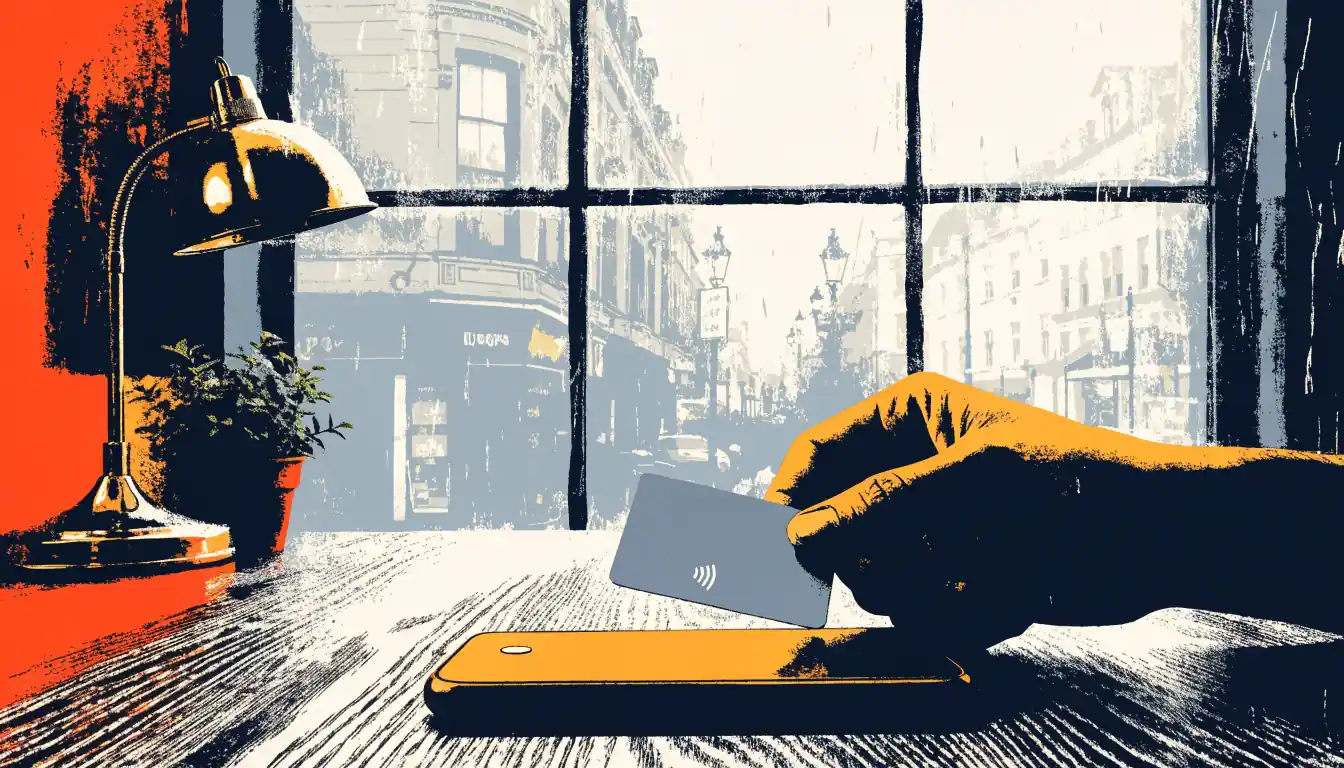
Bank-based payments can use different routes, and deposit and withdrawal times depend on the option shown in the casino cashier.
 Available in GB
Table of Contents
- What a bank transfer changes at the cashier
- Check the cashier before you commit
- A bank transfer is not always instant
- Before you make a deposit
- Use payment details that match
- Getting casino winnings back to your bank
- Why a withdrawal can take longer than expected
- The real cost of paying by bank transfer
- Bank transfers at UKGC-licensed casinos
- Decide whether a bank transfer suits your routine
What a bank transfer changes at the cashier
A bank transfer gives the casino cashier a different shape from a card or wallet payment. Instead of entering card details or signing in to a separate e-wallet, you move money from a bank account through the route offered on the gambling account. That may appear as a standard bank transfer, an open-banking connection, or another bank-based option. The label matters because the process behind it can differ.
That is the first point I would keep in mind when looking at casinos that accept wire transfer in the UK: “bank transfer” is not one universal button. One cashier may send you to your banking app to approve a payment. Another may provide account details for a manual transfer. A third may show the method only after you have logged in, or only for certain accounts. A casino site can mention bank payments without every version of the route being available to every customer.
Where it sits beside other payment methods
UK casino cashiers commonly place bank-based payments alongside debit-card options such as Visa and Mastercard. PayPal may also be present, while some sites list Skrill, Neteller, Apple Pay, Paysafecard or other services. These methods do not work in exactly the same way.
A debit card is generally designed for a direct card payment. PayPal, Skrill and Neteller involve a separate wallet account. Paysafecard is a prepaid voucher for deposits only, so it is not interchangeable with a bank account when you later need a payout. Apple Pay can appear as a deposit option at some UKGC-licensed casinos, but its presence does not mean that every Apple Pay setup supports withdrawals.

Bank transfer therefore appeals to people who would rather keep the movement of funds connected to their own bank account. It can also make the payment trail easier to understand: money leaves a named account, reaches the casino, and any eligible return follows the casino’s payment process. That sounds simple, but the cashier still decides which route is enabled and how it must be used.
I once treated the word “available” as if it meant “available for everything”. That was a needless mistake. A method can be visible for deposits but not selected for withdrawals, or an operator can support an open-banking service without accepting a manual wire transfer. The useful question is not merely whether a casino mentions bank transfer. It is what that particular cashier allows for your account.
A bank route can be direct or connected
Open banking can make a bank-based deposit feel closer to an instant checkout payment. A specialist review has reported that open banking and bank transfers can provide instant deposits and fast withdrawals at many sites, but that is not a promise for every operator or every transfer type. The route shown after signing in is more important than a generic payment-method badge.

With an open-banking option, the cashier may connect you to your bank so that you approve the payment there. With a manual wire transfer, you may instead need to enter the casino’s banking details yourself and include a reference. Those are different experiences, even though both may be described as a bank transfer.
This is also why “best wire transfer casinos UK” is not a very useful category on its own. A casino may suit you if it offers a bank route in pounds and lets you use the same account consistently. Another may be less practical if its cashier presents a different currency or asks you to use a route that does not fit your bank. The method name alone does not settle that.
Keep the payment trail uncomplicated
The cleanest arrangement is often one named bank account used consistently for deposits and withdrawals. Account information and the payment route should belong to the same customer. Matching those basic ownership details reduces the chance of avoidable friction when a transaction is reviewed.
This is not about making a bank transfer look more impressive than a card payment. It is about removing a simple source of confusion. If the casino account carries one customer’s details while the bank payment comes from someone else’s account, the operator may need to establish what is happening before allowing the transaction to continue. A matching route gives the cashier fewer basic ownership questions to resolve.

The same principle applies when comparing online casinos with bank wire transfer options. Do not assume that a relative’s account, a shared account or a different payment profile will be treated in the same way as your own named account. The safest practical habit is to use details that identify you consistently and to keep the payment route compatible with the account.
Small detail. Big difference.
Check the currency before moving money
Pound sterling may be supported by a casino account, but the account currency still needs checking before the first transaction. If the account is set to another currency, a bank transfer can involve conversion even when your own bank account is in pounds. That can change the amount credited and make the payment harder to reconcile.
I would look for the account currency in the cashier or account settings before sending anything. The point is not to assume that a UK-facing casino automatically handles every account in GBP. Confirming it first can prevent a payment arriving in a different currency or being converted along the way.

So, when you see a list of wire transfer casinos or casino sites that accept wire transfer, read it as an invitation to inspect the cashier, not as a guarantee that every bank route is ready for use. Bank transfer can sit neatly beside cards and wallets, and some bank-based services may be quick. But the real difference is control over the payment trail: which account sends the money, which route the cashier supports, and which currency the account uses.
Check the cashier before you commit
A casino can mention bank transfer on a payment page and still not offer it to every customer. That is why I check the cashier after logging in, rather than treating a general payment list as a promise. The option shown for your account is the one that matters.
Look for the funding methods attached to your profile. If bank transfer appears there, check what the cashier actually allows you to do with it. A deposit button is not enough when you also want a bank transfer casino withdrawal later. The route needs to work in both directions, or you may end up paying in one way and having to sort out a different payout method afterwards.
That distinction is easy to miss. I have made the mistake of reading a payment badge as though it described the whole account. It did not. A method can be displayed in promotional material while its availability depends on the customer, the account setup or the payment product being used.
DO
- Check the cashier after logging in to see available methods
- Use the same named account for both deposits and withdrawals
- Confirm the account currency before your first transaction
DON'T
- Assume a method is available for both deposits and withdrawals
- Use a relative's, a shared, or a business account
- Rely on a general payment list as a promise
Read the cashier, not the banner
The same caution applies to cards. A specialist review may list Visa and Mastercard among the payment methods, but that does not establish that every UK customer can use every card product at that casino. Open your cashier and check the method presented for your account before entering any banking details.
For a UK account, the product type matters. A debit card is not interchangeable with a credit card, and UK-licensed casinos cannot accept credit-card payments for gambling. Do not assume that a card carrying a familiar brand will be treated in the same way as another card from that brand. The cashier’s available option and the casino’s payment terms should agree.
I would check these points before committing money:
- Is bank transfer visible after signing in?
- Is it listed for deposits, withdrawals, or both?
- Does the account show the currency you intend to use?
- Are the instructions for the casino’s own payment route, rather than a separate method with a similar name?
- Does your chosen bank account or card fit the payment type shown?
If one answer is unclear, I stop there. Two minutes of checking beats an awkward payment trail.
Confirm the account currency
Currency is another detail that looks harmless until it is not. A cashier may support pounds, but you should confirm the currency attached to your casino account before making the first transaction. If the account is set up in another currency, a bank transfer can involve conversion even when the payment page looks familiar.
That can affect the amount credited and complicate the return payment. It also makes it harder to compare what left your bank with what appeared in the casino balance. I prefer the account currency, bank account and payment instructions to line up before I deposit.
This is particularly relevant when looking at online casinos that accept bank wire transfers from UK customers. The words “bank transfer” describe a route, not necessarily one identical process everywhere. One cashier may show local bank details; another may direct you through a separate banking service. Follow the instructions attached to your own account instead of copying details from a review or forum post.
A copied detail can be out of date. Worse, it can belong to a different route entirely.

Check the return route too
Before depositing, open the withdrawal area as well. UK anti-money-laundering controls commonly require winnings to be returned to the original payment source. That means the method you use to fund the account can influence how the casino handles a later payout.
Returning money to the original source is also a common anti-fraud control. If you want funds sent elsewhere, the casino may ask for extra verification before accepting that arrangement. This is not a reason to avoid bank transfer; it is a reason to understand the route before using it.
I would therefore treat “deposit available” and “withdrawal available” as separate checks. A payment method can be useful for adding funds but unsuitable for receiving them. If the cashier does not clearly show how the two sides connect, read the operator’s payment terms or contact support before making the deposit.
A practical pre-deposit check
For a bank transfer casino account, my order is simple:
- Sign in and open the cashier.
- Confirm that bank transfer is available to your account.
- Check the deposit and withdrawal instructions separately.
- Confirm the account currency.
- Check whether the payment product you plan to use is eligible.
- Read any return-to-source condition before sending money.
This is not about finding a “best” wire transfer online casino from a slogan. It is about whether the particular account works with the particular route you intend to use. A polished payment page tells you less than the cashier you see after registration.
When those details line up, the decision is clearer. When they do not, I would not force the transaction simply because a site advertises bank transfer. The cashier has already answered the important question: whether that option is genuinely available for your account and usable on the way back.
A bank transfer is not always instant
A bank transfer can look simple at the cashier: enter the amount, confirm the payment, and wait for the casino balance to update. That last part is where expectations often go wrong. A deposit and a withdrawal travel through different checks, so the fact that money can be sent to an online casino by bank transfer does not tell you how quickly money will come back.
I made that mistake myself. I treated the payment label as a timing promise. It is not.
Deposits and withdrawals follow different paths
A deposit may be made available once the payment provider and the casino have received the necessary confirmation. Some specialist reviews describe open banking and bank-transfer deposits as instant at particular sites, but that is an observation about those services and operators, not a universal feature of every online casino that accepts wire transfer payments.

A conventional bank transfer can also be affected by the sending bank’s processing timetable. The transfer may be initiated outside the relevant banking window, or after the provider’s daily cut-off. In that case, the instruction may wait for the next processing cycle rather than reaching the casino immediately.
The same applies around weekends and bank holidays. A payment submitted late in the day may not move in the same way as one sent during a working banking period. The cashier can show the method as available while the banking route still takes time to complete.
Why the withdrawal clock is different
An online casino wire transfer withdrawal normally has an extra stage before the bank receives anything. The casino may need to review the request, confirm the account status and complete any required checks. A specialist review identifies internal approval and account verification as important parts of the withdrawal timetable, with first withdrawals potentially taking longer while verification is completed.
That means there are two separate stages to keep apart:
- Casino processing: the request is reviewed and approved.
- Bank delivery: the approved payment moves through the banking system.
The second stage cannot begin until the first one is finished. If the account is not fully verified, the casino’s internal process may take longer. If it is approved, the bank can still apply its own timetable.
This is why a card deposit being credited quickly tells you almost nothing about a later payout. A payment arriving at the cashier and a withdrawal reaching your bank are different transactions, with different controls.
Currency and cut-off times still matter
Check the account currency before sending money. Where the casino account and bank account use different currencies, conversion can be involved before the balance is usable or the withdrawal reaches you. The transfer route may therefore take longer than a straightforward payment in the same currency, and the amount received can be affected by the conversion applied along the way.
Cut-off times, weekends and currency conversion are all recognised factors in bank-transfer delivery. None provides a reliable arrival promise by itself. Even an online casino wire transfer withdrawal that has been approved may wait for banking processing, while a deposit that appears to be supported may not be credited at once.
I now read the cashier’s wording literally: available means available, not instant. Then I check the transaction status and keep the casino’s approval stage separate from the bank’s delivery stage. That small distinction prevents a lot of needless chasing.
Before you make a deposit
A casino wire transfer deposit is not simply a matter of entering an amount and pressing confirm. The cashier may apply a minimum for the selected route, while your account can also have transaction limits that affect how much you are allowed to send. I learnt that distinction the annoying way: the payment method was visible, but the amount I wanted to use was not accepted.
A specialist review of UK casino payment options puts the starting point for many deposits at £10–£20, depending on the method selected. Treat that as a guide, not a universal tariff. A wire transfer deposit casino page may set a different minimum, and the amount shown after you log in is the one that matters. The cashier can also display the limit only after you choose bank transfer, so check the route itself rather than relying on a general payment page.
Three limits can apply
When you are considering a wire transfer casino deposit, look for more than the minimum. The operator may set a maximum:
- for one transaction;
- across a day;
- across a month.
Those limits are not fixed across every payment method. Account status can affect them as well. That means two customers looking at the same casino wire transfer option may not necessarily see identical boundaries. A new account, an account with incomplete checks, or an account subject to its own controls may be handled differently from an established one.
This is why splitting a larger payment into several smaller transfers is not automatically a solution. The cashier may count the total against a daily or monthly ceiling, and your bank may show several pending instructions while the casino sees the same overall activity. Check the permitted amount and the remaining allowance before sending anything.
Set your financial limit first
UKGC rules require remote gambling licensees to ask new customers to set a financial limit before the first deposit. The control is not hidden in fine print: it forms part of the journey into the account. Remote gambling licensees must also provide accessible account-level tools so you can manage that limit after registration.
That control is separate from the bank-transfer minimum and the casino’s payment ceiling. A method might accept a particular amount, but your own financial limit can be lower. In that case, the personal control wins. I prefer to set it deliberately before opening the cashier, rather than clicking through the prompt just to reach the deposit screen.
Think of the checks in this order:
- Decide the amount you are comfortable putting into the account.
- Set the financial limit offered in the account controls.
- Open the bank-transfer option and read its minimum.
- Check the per-transaction, daily and monthly maximums shown for your account.
- Send only an amount that fits all of those conditions.
The point is not to find a way around a limit. It is to avoid a rejected transfer, an incomplete deposit, or a payment that leaves you trying to work out which rule stopped it. With wire transfer casino sites in the UK, the useful figure is the one attached to your logged-in cashier at the moment you pay. Shortcuts create paperwork.
Use payment details that match
When I look at a casino that accepts wire transfer deposits, I check one detail before thinking about anything else: whose name is attached to the bank account. The casino account, the bank account and the payment route should point to the same customer. That simple match removes a surprising amount of avoidable friction.
It does not mean every transfer will be accepted automatically. A remote gambling licensee can still ask for documents, pause a transaction for review or apply its own payment conditions. The point is narrower: if the basic ownership information already agrees, there is less chance that a routine transaction becomes a question about someone else’s money.
Use your own bank account
If you register with your own details and then try to fund an online casino account from a bank account held by another person, the ownership trail is no longer straightforward. A partner’s account, a relative’s account or a business account may create a mismatch even when the transfer itself reaches the correct banking details.
I made the mistake of treating the bank account as just a delivery tool. It is not. The name on it helps the casino understand who is sending the money and whether that payment belongs with the gambling account. A bank wire transfer is still tied to those underlying account details.

The cleanest arrangement is one named account used consistently for both deposits and withdrawals. That gives the casino a clearer payment history and avoids switching between unrelated sources. It also makes your own records easier to follow when checking incoming and outgoing transactions.
Keep the payment route compatible
Ownership is only one part of the check. The selected route must also be supported by the cashier for the transaction you want to make. A method shown for deposits is not automatically available for withdrawals, so do not assume that a bank transfer, card or wallet can be used in both directions without checking.
That matters particularly when you move between methods. You might deposit through a bank account but later try to request a payout to a different wallet or card. The casino may ask why the route has changed or request extra evidence before releasing funds. Returning money through the original payment source is a common anti-fraud and anti-money-laundering control, while an alternative route can require additional checks.
This is why I would not choose a payment method merely because its logo appears on a general payments page. I would open the cashier while logged in and check whether the route is available for my account, whether the account details are accepted and whether the same route can receive funds later.
A quick ownership check
Before sending money to a casino that accepts wire transfer payments, check:
- the name on the casino account matches the name on the bank account;
- the bank details belong to you rather than to another person or business;
- the cashier identifies the route as available for your account;
- the payment method is supported for the transaction direction you need;
- you keep the same named route where practical.
None of this makes a payment immune from review. It simply avoids creating a problem with the information you control. Match the details first. Less noise later.
Getting casino winnings back to your bank
When you request casino winnings by wire transfer, the cashier may not simply send the money to any bank account you enter. The usual starting point is the payment route used to fund the account. UK anti-money-laundering controls commonly require a payout to go back to the original payment source, helping the remote gambling licensee check where funds came from and where they are going.
That matters if you deposited through a card, wallet or bank transfer. The available withdrawal route may be tied to that earlier transaction, and the cashier can restrict alternatives until the payment history is clear. I once treated the withdrawal screen as a menu of interchangeable choices. It is not.
Why payouts might be delayed
Before a withdrawal reaches your bank, the casino must review the request, confirm your account status, and complete any required verification steps. This internal approval process must be finished before the bank delivery stage can begin.
Why the first withdrawal can feel different
A first payout often involves more than pressing “withdraw”. The casino may need to complete KYC, confirm your identity and check that the bank details belong to you. A specialist review of withdrawal procedures says internal approval and verification can make an initial withdrawal take longer than later requests. That is a description of a reported process, not a fixed timetable for every casino.
The checks may include documents, account information and the relationship between the deposit and withdrawal route. If something does not line up, the casino may pause the request and ask for more evidence. Returning funds to the original source is also an anti-fraud and AML control, so an alternative bank account is not automatically accepted just because it is convenient.
For a payout to your bank, check the details shown in the cashier before confirming the request:
- whether the bank-transfer route is available for withdrawals;
- whether the named account matches your casino account;
- whether the payment source is eligible for a return;
- whether additional verification is requested.
If the casino cannot send the funds through the original route, it may offer another method only after further checks. That can mean supplying bank information or identity documents again, depending on the operator’s process. Do not assume that changing the destination will make the payment simpler.
The key distinction is between winning funds being approved and money arriving in your bank account. The casino must first release the withdrawal under its own controls; only then can the transfer proceed through the banking route. Keep the confirmation and any messages from the cashier until the funds appear. That small bit of housekeeping has saved me from chasing a payment without knowing whether the delay was at the casino or elsewhere.
A bank withdrawal is therefore less about finding a convenient button and more about keeping the payment trail consistent. Use the route the cashier authorises, provide documents promptly if requested, and expect the first request to receive closer attention.
Why a withdrawal can take longer than expected
A casino wire transfer withdrawal has two separate clocks. The first belongs to the casino: it reviews the request, checks the account and approves the release. The second belongs to the banks handling the payment after approval. I used to treat “withdrawal pending” as a banking delay. Often, it is not even at the bank yet.
A casino may pause a wire transfer casino withdrawal while it confirms that the account is fully verified. This can be more noticeable on a first withdrawal, when the operator may still need to complete KYC checks. Until that internal work is finished, the transfer timetable has not really started. A status such as “processing” therefore does not tell you that the money is already moving through the banking system.
A specialist review describes withdrawal speed as dependent on both the operator’s approval process and the player’s verification position. That distinction matters when you contact support. Ask whether the request is waiting for casino approval, whether KYC is complete, or whether it has already been sent to the bank. Those are different stages, even if the cashier displays only one broad status.
Once released, delivery can still be affected by the banking route. Cut-off times may push a payment into the next processing window, while weekends can leave it waiting until banking operations resume. Currency conversion can add another step if the casino account and receiving bank do not use the same currency. A specialist review also identifies these factors as influences on bank-transfer delivery, rather than treating the advertised method as a fixed arrival schedule.
I check four things before assuming something has gone wrong:
- whether the casino has approved the withdrawal;
- whether any KYC request remains open;
- whether the payment was released before the bank’s cut-off;
- whether currency conversion is involved.
That simple split avoids chasing the wrong party. The casino controls the review and release; the bank controls the later delivery stage. If the casino confirms dispatch but the account shows nothing, the bank is the sensible next contact. If the request is still pending internally, asking the bank will not move it along. Two clocks, two answers.
The real cost of paying by bank transfer
The amount leaving your account is not always the amount a casino payment costs you. I used to look only for a line saying “no fee” and treat the job as done. That was a bit too trusting. A wire transfer payment to a casino can involve several separate charges, and some are easier to spot than others.
A casino may apply its own payment charge. The payment provider can add another. Your bank or the account issuer may charge for sending, receiving or handling the transaction, while a network fee may appear somewhere in the route. None of those costs is guaranteed for every bank transfer, so the cashier and your bank’s tariff matter more than a general claim about “free” payments.
The awkward one is currency conversion. If your casino balance and bank account use different currencies, the amount may be converted before it reaches you or before the casino credits it. The exchange rate can include a spread: a margin built into the rate rather than shown as a separate fee. A specialist review source has noted that this spread can cost more than a clearly displayed flat charge. That is why a payment with no visible fee is not automatically the cheapest option.
What to compare
Before sending money, I would check these points for the exact amount involved:
- any casino charge shown in the cashier;
- the bank-transfer provider’s fee;
- charges from your bank or account issuer;
- the exchange rate and any conversion spread;
- network or intermediary costs.
The final comparison should be based on what arrives at the casino, or what reaches your bank after a withdrawal, not simply on the first fee displayed. A small fixed charge can matter differently from a percentage built into an exchange rate, especially when the payment amount changes.
There is no single payment method that is guaranteed to have the lowest total cost. Compare the casino’s charge, provider fee, currency conversion and network cost for the transaction you actually plan to make. I learned that the hard way: “free” is often just the most visible part.
Bank transfers at UKGC-licensed casinos
A bank wire transfer casino in the UK sits inside a payment system shaped by Gambling Commission rules, not just by the cashier’s design. A remote gambling licensee serving Great Britain must hold the relevant UK Gambling Commission licence. That matters because the licence brings payment safeguards with it, including how customers are allowed to fund an account.
The most obvious boundary is credit-card gambling. The regulator prohibited credit-card payments for gambling on 14 April 2020, and that restriction remains in force. A UKGC casino therefore cannot accept a credit card as a deposit route. The same principle covers credit-card funding routed through a money service business. Calling the payment a “bank transfer” does not change where the funds came from.
That is worth checking when you use an intermediary. A wallet or money service account may look separate from your bank, but it cannot be used to get around the credit-card restriction. UK-licensed remote gambling operators also cannot accept wallet payments where the wallet permits credit-card funds to be used for gambling.

The prompt before your first deposit
There is another control you meet before the cashier should accept a first deposit. New customers must be prompted to set a financial limit before depositing. This is an account-level control, not a note hidden in the terms. The operator must also make the relevant limit tools accessible after the account is open.
I remember treating that screen as an obstacle and clicking through too quickly. That was backwards. The prompt is a useful pause before money reaches the gambling balance. You choose a boundary before the excitement of a game can influence the decision, then you can return to the account controls when your circumstances change.
A bank transfer does not bypass this step. Whether you are funding the account from your banking app or selecting another permitted route, the operator still has to apply the pre-deposit financial-limit process. The cashier may present the limit setting separately from the payment screen, so do not assume that seeing bank transfer listed means every preliminary control has been completed.
For a UKGC casino bank transfer, the practical checks are therefore simple:
- the site must be operating under the relevant UK Gambling Commission licence;
- the funding route must not involve a prohibited credit-card payment;
- any wallet used must not allow credit-card funds to reach gambling;
- the financial limit must be set before the first deposit.
No marketing label changes those rules. “Flexible” often means only that the cashier offers several routes. The safeguards still apply.
Decide whether a bank transfer suits your routine
A bank transfer suits you if you want a payment route you can keep under control, not simply one that looks quick in a cashier. I would judge it on four things: whether the route is available for your account, how comfortably its timing fits your plans, what the complete charge will be, and whether you can use the same bank account consistently.
The account detail matters more than the “best” label attached to a casino. A clean arrangement is often one named bank account used for both deposits and withdrawals. That keeps the ownership trail straightforward and reduces the chance of basic payment details creating friction later. It is not a guarantee that every transaction will pass without checks, but it is a sensible routine.

Timing is the awkward part. A bank transfer may work perfectly for your deposits yet feel inconvenient when you are waiting for money to come back. If you need a method that fits around a particular payment date, read the cashier and the withdrawal terms rather than assuming the deposit experience tells you anything about payouts. Different stages can involve different handling.
Cost needs the same scepticism. A specialist review may call one method “cheap”, but that label does not settle the amount you will lose. Compare any casino charge with provider or bank fees, the exchange-rate spread and network costs for the actual transaction. A visible flat fee is easy to spot; a poor conversion rate is quieter.
My practical test is simple: can you identify the route, understand its timing, see the likely costs and keep one matching account in use? If yes, a bank transfer may fit your routine. If not, pause before depositing. Better to check once than untangle a payment later.
What is the fastest withdrawal method for UK casinos?
PayPal, open banking and debit cards linked to fast payout systems are generally among the quickest. Your payout also depends on the casino’s approval process and whether your account is fully verified.
Which payment methods are accepted in Great Britain?
UK casino cashiers commonly offer Visa and Mastercard debit cards, bank transfers and PayPal. Some also accept Skrill, Neteller, Apple Pay or Paysafecard; check the cashier to see which options are available for your account.
Which method has the lowest fees?
There is no universally cheapest method. Compare casino and provider charges, bank or issuer fees, currency conversion spreads and any network costs for your payment.
Is Skrill available?
Yes, Skrill remains a common deposit option at UK-friendly casino sites, though availability varies by site and it is often excluded from promotions.
Do UK casino withdrawals require verification?
Yes, verification may be completed before a withdrawal is approved, and first withdrawals can take longer while checks are carried out. Keeping your account and payment details consistent can help avoid basic ownership questions.
Why can a fast payout casino still delay my withdrawal?
A casino must approve the withdrawal before the payment provider or bank delivers it. Verification, especially on a first withdrawal, can add time; bank cut-off times, weekends and currency conversion can also affect delivery.
Prepared by the Casino not on Gamstop editorial staff.